BRR Blog - 29 December 2025
Merry Betwixmas, Road Runners
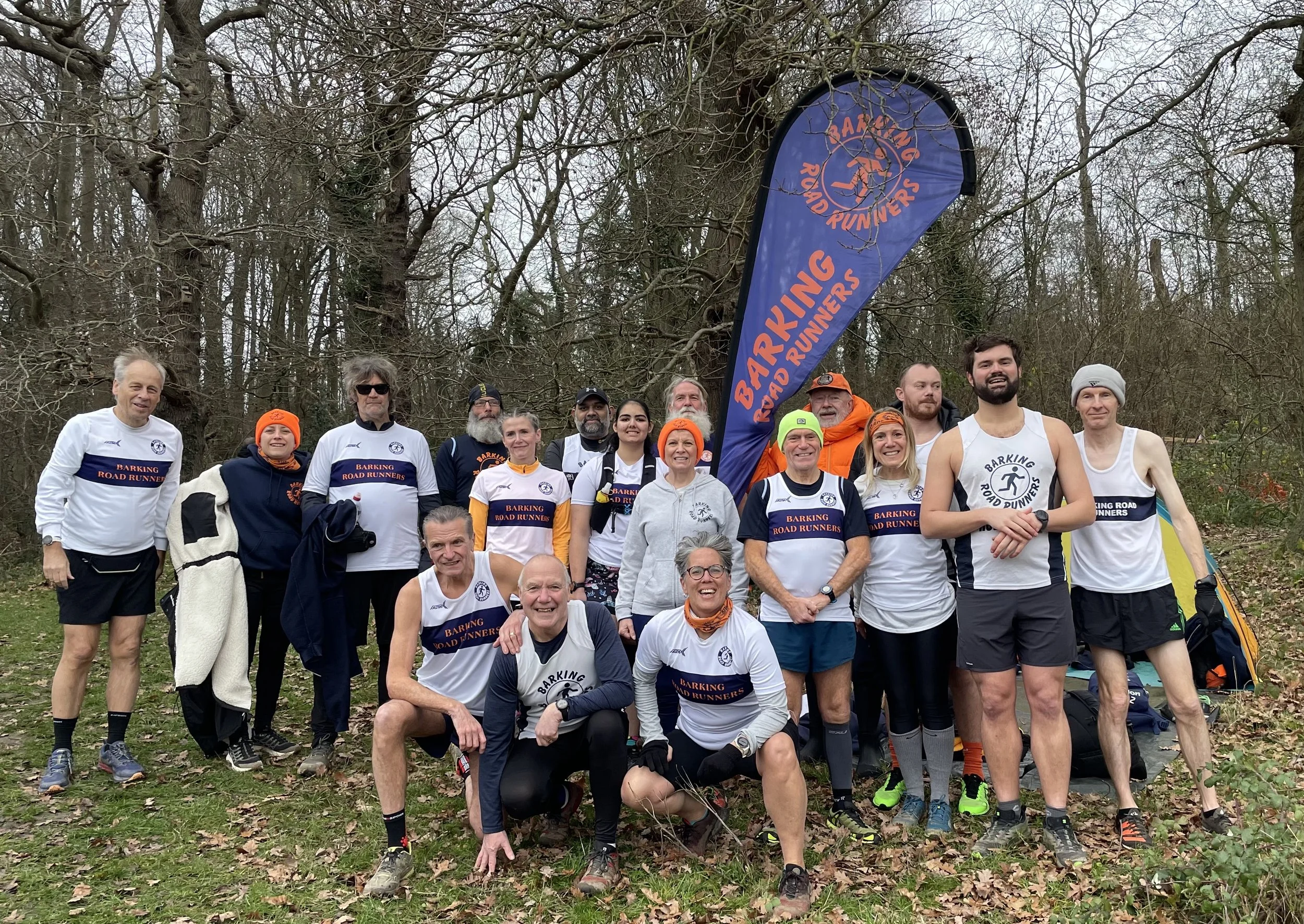
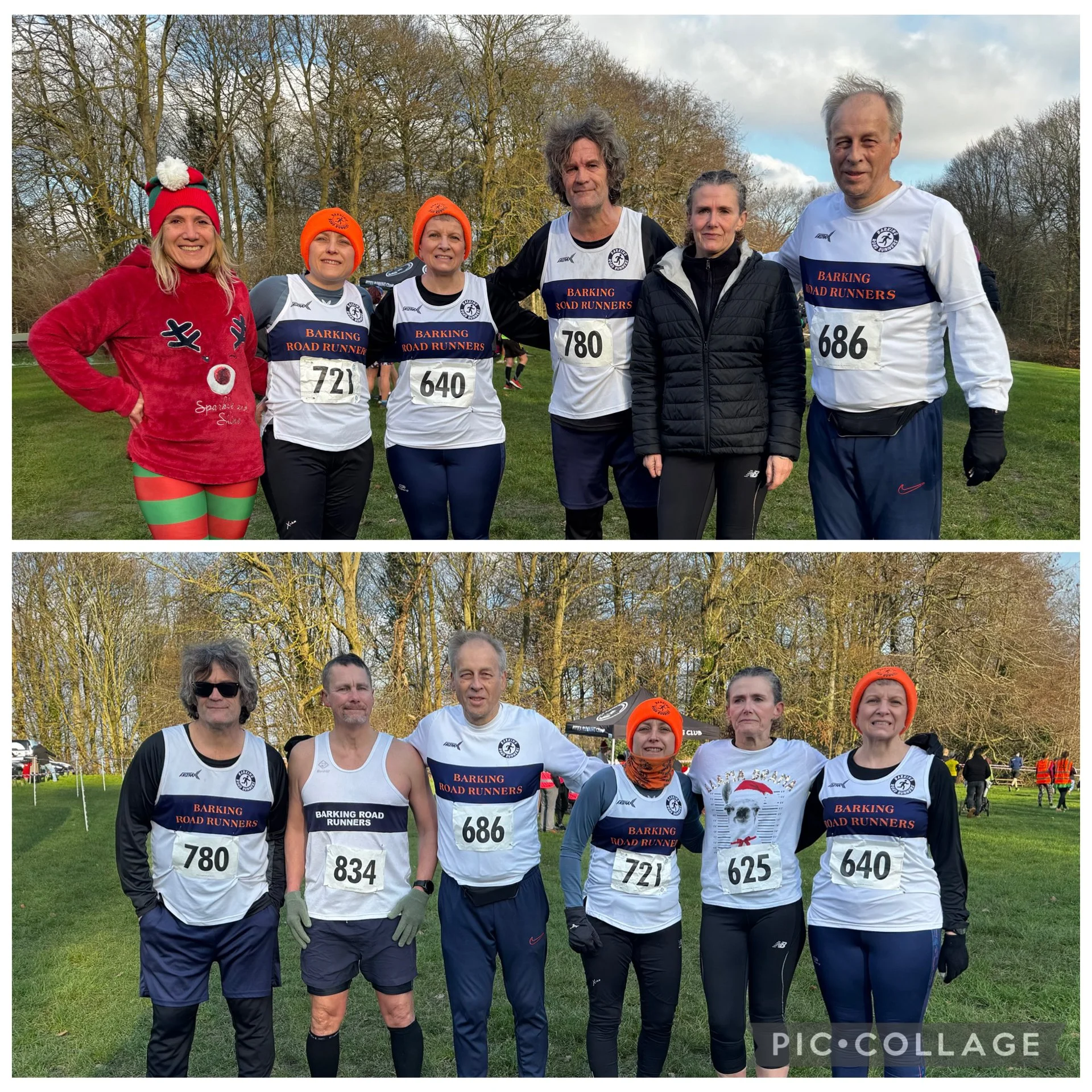
Hadleigh XC Team photo, with just Cristina missing…
I hope you are enjoying the festive period. Commiserations if you have had to return to work today; I always take the quiet period over Christmas as an opportunity to use up some annual leave. I usually have great plans for all the things I am going to get done, then find I do none of them except a few runs! If you are at a loose end, perhaps the blog will help you while away a few minutes…
12 Workouts of Christmas
If you are following the 12 workouts of Christmas, how is it going? For me, it still feels reasonably easy but I’m sure it won’t by the time we reach Twelfth Night. If you have missed the workouts so far, it is not too late to catch up. Today (Monday 29 December) we are on Day Five.
(Make sure you sing the song as you do the exercises) On the fifth day of Christmas, my coach sent to me:

A standing side bend
🎁 5 Standing Side Bends (each side) - Start in a tall standing position, feet hip‑width apart, knees soft, core engaged. Lift your right arm overhead, keeping it straight but relaxed. Rest your left hand on your hip or let it slide down your leg. Inhale to grow tall. As you exhale, slowly bend your torso to the left, reaching your right arm overhead. Hold the stretch for 15–30 seconds, breathing steadily. You should feel a stretch along the right side of your torso. Return to centre and repeat on the other side.
🎁 4 Squats
🎁 3 Calf Raises
🎁 2 Wall Push-Ups
🎁 and a 30 seconds jog with high knees.
December Committee Minutes
Here are the minutes from the December 2025 Committee meeting, with thanks to Isabel.
Unkind Cut-offs?
At the 2025 Valencia Marathon earlier this month, runners who hadn’t reached 40 kilometres by five hours and 30 minutes were diverted off the main route as roads reopened and event staff stood down. The change marked a shift from Valencia’s previous six‑hour limit and was introduced to simplify logistics and reduce the duration of citywide closures—while maintaining the race’s reputation as one of the world’s fastest courses. Similar trends are appearing in parts of China and South Korea, where even stricter limits mean roads can reopen as early as the five‑hour mark. In these cases, runners are not removed from the event entirely but must continue without formal course support, often on the pavement. In contrast, the New York City and London marathons welcome a broader range of participants and have eight‑hour limits. The Honolulu Marathon has one of the longest cut-off times at 12 hours.
Shorter cut-off times offer some advantages. They ease pressure on municipal services, reduce volunteer hours, and limit disruption to local traffic and businesses. Cities benefit from predictable, shorter periods of road closure—an important factor when negotiating permissions with local authorities and the police. Also, for elite‑oriented events like Valencia or Berlin, a tighter window reinforces a “fast course” identity that attracts performance‑driven athletes. I’m sure those who frown on the London Marathon becoming so charity/fun-runner focused, would approve.
However, there are clear drawbacks. Reduced time limits can make races less inclusive for slower or first‑time marathoners, discouraging participation and potentially narrowing the event’s appeal. Running without aid stations, medical teams or closed roads can also diminish safety and enjoyment for those at the back of the pack – after all, it’s a matter of opinion that faster runners are more important.
The compromise is to do what London has done with a dedicated back-of-pack support crew that moves slower competitors onto the pavement if they are slower than the cut-off time but continues to provide support, allowing roads to reopen on a rolling basis once they have passed.
What’s your view? Are shorter cut-off times a good or bad thing?
The Air that I Breathe
Both beginners and seasoned athletes can experience breathlessness while running. Running is a high-intensity, full-body activity that places significant oxygen demands on the muscles and heart and efficient breathing is essential to make it feel easier.
Although breathing is mostly unconscious (you don’t have to tell yourself to breath in and out - I hope), consciously focusing on how you breathe can help you run more comfortably and efficiently. During easy runs, nasal breathing can be sufficient, as it filters, humidifies, and warms the air, making it ideal for cold or polluted conditions. However, since the nasal passages are smaller, breathing through both the nose and mouth is recommended for higher-intensity runs to maximise oxygen intake.
Here are five key tips to help you breathe better while running:
1. Practice Belly Breathing: Focus on deep, diaphragmatic breaths that expand your abdomen rather than shallow chest breathing. This technique allows for more efficient oxygen intake. Try practising belly breathing before your run to build the habit – breathe in deeply up to your chest, expanding your stomach, then exhale totally, sucking your tummy in.
2. Check Your Form: Good posture aids breathing by preventing compression of the lungs and diaphragm. Run tall with relaxed shoulders, an upright chest, and an engaged core to facilitate easier, fuller breaths.
3. Use Rhythmic Breathing: Establish a consistent breathing pattern, such as inhaling for three steps and exhaling for two (3:2 ratio). This rhythm helps balance the stress on your body, reduces the risk of side stitches, and can make breathing feel more natural. It is also a helpful distraction during tough runs!
4. Strengthen Breathing Muscles: Like any muscle, your diaphragm and intercostals (the muscles located between your ribs that help expand and contract your ribcage can be strengthened through training. Using respiratory training devices or specific breathing exercises can improve your lung capacity, making it easier to meet your oxygen needs during exercise.
5. Get Evaluated for Asthma: If you’ve been running consistently and still struggle with breathlessness despite proper breathing techniques, consult a doctor to rule out asthma or exercise-induced asthma. Addressing underlying issues can make running safer and more enjoyable.
Ekiden - The Japanese Relay Race Tradition
Ekiden is a long-distance relay race that originated in Japan and has become a cultural phenomenon. Unlike standard track relays, ekiden races cover marathon or even ultra-marathon distances, with teams of runners passing a cloth sash called a tasuki instead of a baton. Each runner completes a section of the course before handing off the sash to the next teammate.
The first Ekiden race was held in 1917, a three-day, 23-stage relay from Kyoto to Tokyo, covering over 500km to celebrate Tokyo becoming the nation's capital. Now it is hugely popular amongst universities and corporate teams and the Hakone Ekiden, held every January, is one of the country’s most-watched sporting events.
The term “Ekiden” comes from Japan’s old mail delivery system: eki (station) and den (transmit). This historical connection reflects the idea of teamwork and endurance over long distances. I suppose it is very similar to the Essex Way or the Spitfire Scramble team event, though with a bit more history behind it.
A-Z of Running
Episode twenty in the A-Z of running, and this week it is brought to you by the letter ‘T.’ Terrific!
Tactical Pace - A deliberately conservative or strategic pace used—often at the start of a race—to conserve energy or allow scope for responding to competitors’ moves later on.
Taper - A period of reducing training volume and intensity before a race so the body can recover, rebuild, and be at peak performance for race day.
Tape (Kinesiology Tape) - Elastic therapeutic tape applied to muscles or joints to provide support, reduce strain, and encourage better movement without restricting mobility.
Target Pace - The specific pace a runner plans to hold throughout a run or race to achieve a goal time.
Tempo Intervals - Workouts consisting of repeated segments at tempo (or threshold) pace with short recovery breaks, designed to improve sustained speed and lactate management.
Tempo Run (Threshold Run) - A continuous run at a “comfortably hard” pace just below anaerobic threshold, used to improve endurance and the body’s ability to clear lactate.
Tendonitis - Inflammation or irritation of a tendon—common examples in runners include Achilles tendonitis or patellar tendonitis, often caused by overuse or building up speed or mileage too quickly.
Terrain - The type of surface or environment you run on—examples include trail, pavement, grass, treadmill, or track.
Threshold Pace - The fastest pace a runner can sustain without lactate building up too quickly; typically the pace sustainable for about 45–60 minutes.
Track - A standardized 400‑metre (or 200-metre indoors) oval running surface used for speed workouts, interval sessions, and competitive events.
Track Spikes - Lightweight racing shoes with removable metal spikes that provide grip and speed for track events.
Training Load - A combined measure of the stress placed on the body from workouts, incorporating intensity, frequency, and duration.
Trail Shoes - specialised footwear designed to handle the unpredictable conditions of natural terrain, including dirt paths, gravel, mud, and rocky ground. There are different types depending on the type of trail you plan to run: they may have extra-aggressive lugs for excellent grip on slippery or uneven surfaces or rock plates for protection against sharp rocks and roots.
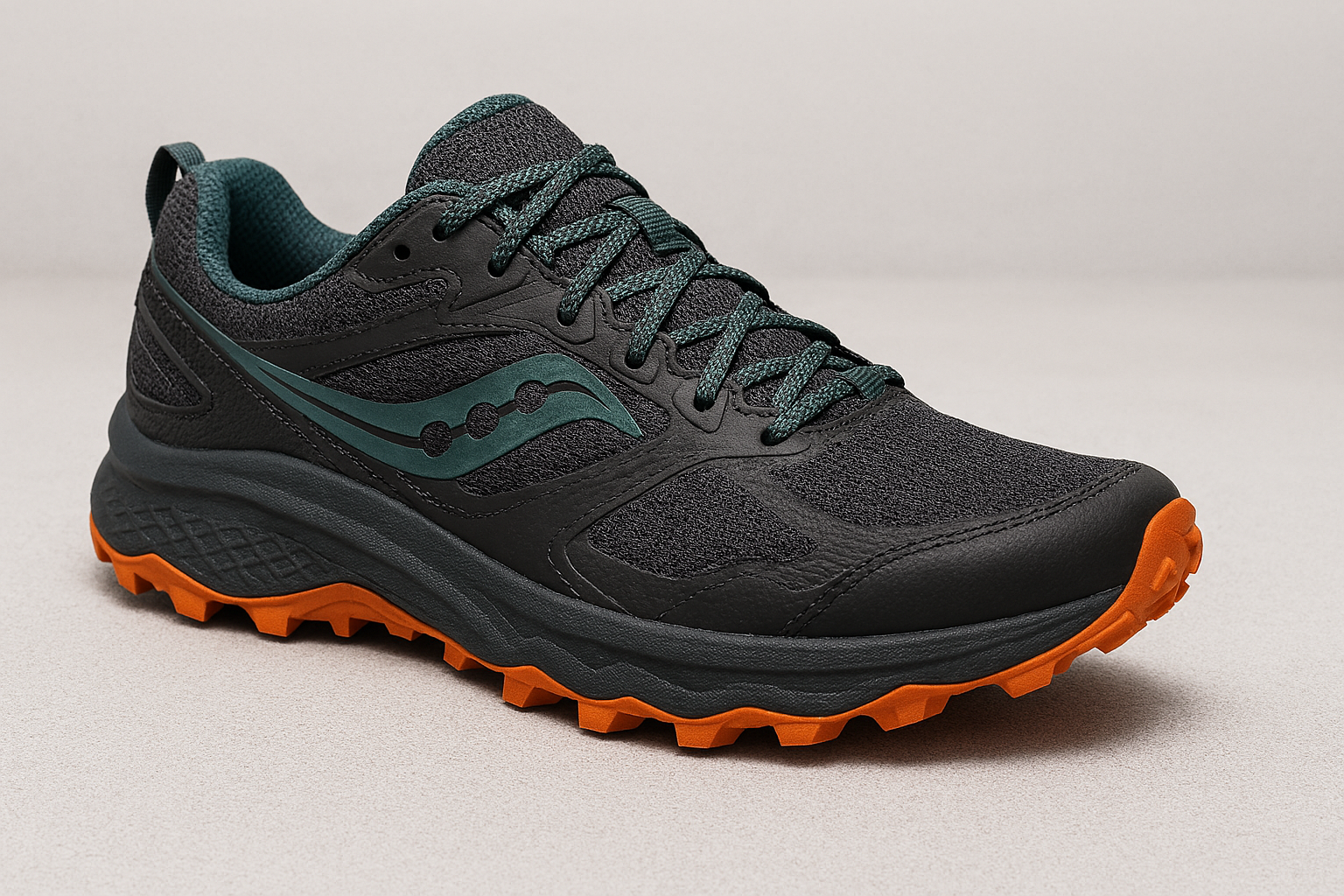
A typical trail shoe
Training Peak(s) - High‑volume or high‑intensity phases in a training cycle designed to build fitness; also a term sometimes used informally to refer to hardest weeks before tapering.
Training Plan - A structured schedule of workouts—usually over weeks or months—designed to progress toward a running goal or race. You do have a training plan, don’t you?
Training Volume - The total amount of running done, typically measured in weekly mileage or total time spent running.
Turnover - The rate at which a runner cycles through strides—measured as steps per minute; higher turnover generally improves efficiency.
Greg’s Race Report
Busy Christmas period for Barking Road Runners with races and parkruns including South Essex Cross Country League Round 03 hosted by Leigh-on-Sea Striders at Hadleigh Country Park.
First BRR finisher on the day was Steve Philcox followed by Rory Burr, Martin Page, Tom Brennan, Ron Vialls, Nick Gorman, Gary Harford, Steve Colloff, Barry Rowell, Dennis Spencer Perkins and Nabeel Akram. For the women first BRR finisher was Cristina Cooper followed by Belinda Riches, Nikki Cranmer, Joyce Golder, Alison Fryatt, Dawn Curtis, and Zahra Akram.
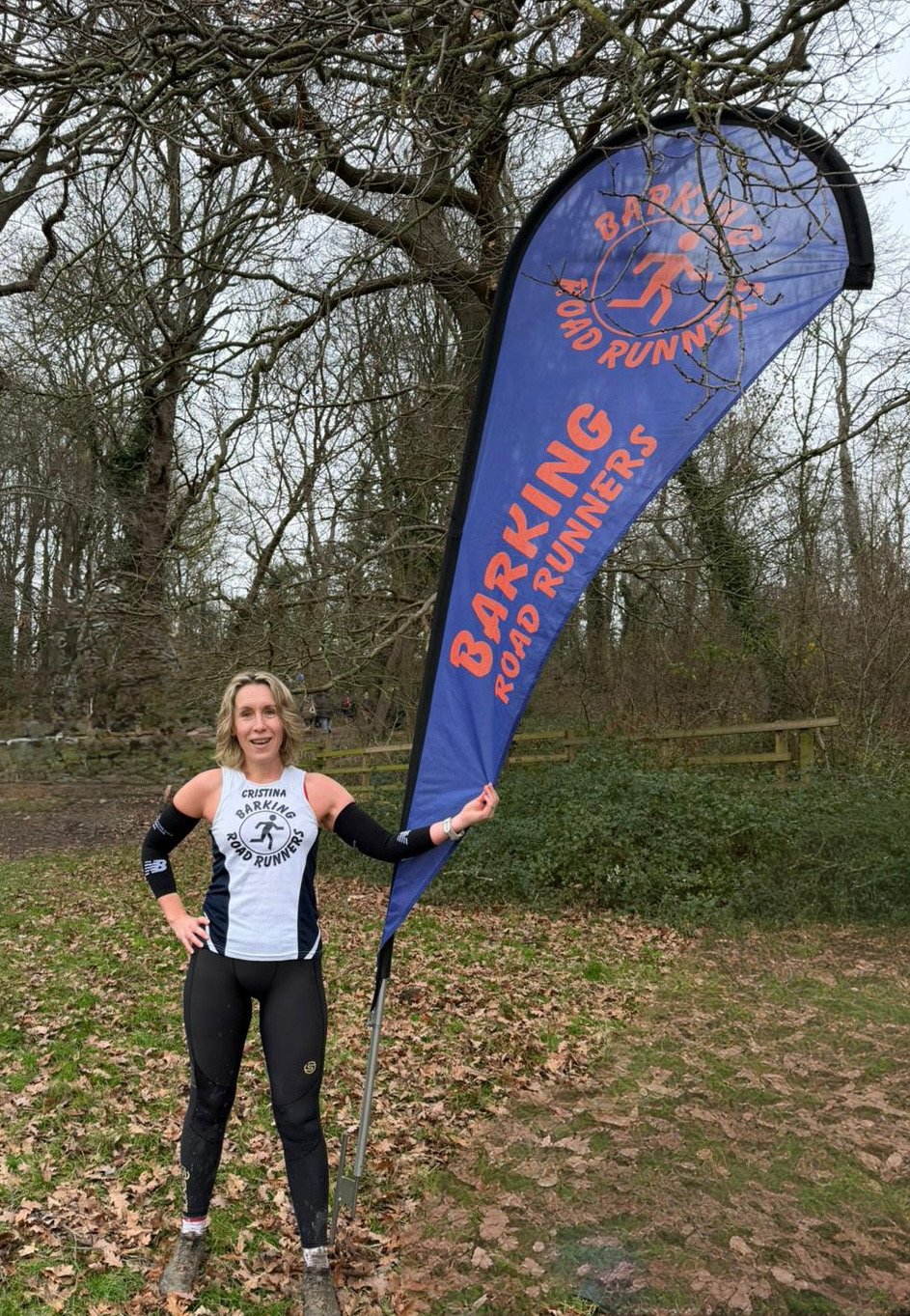
Cristina at Hadleigh.
Several BRR members ran in the Boxing Day Crown to Crown 5k organised by Pitsea Running Club in Langdon Hills Country Park. First finisher for BRR was Colin Jones 25:49 followed by Belinda Riches 27:17, Nikki Cranmer 31:05, Barry Rowell 31:43, Steve Colloff 33:00, Alison Fryatt 36:30, and Dawn Curtis 38:50.
The BRR Team at the Crown to Crown
BRR Christmas Day Park Runners
Barking - Paul Withyman 22:22, Rory Burr 22:42, Rosie Fforde 23:45, Kevin Wotton 25:47, Belinda Riches 25:56, Stuart Burr 27:12, Richard Dudman 27:27, Mark Odeku 27:36, Cristina Cooper 28:18, Barry Rowell 28:25, Emma Paisley 29:44, Steve Colloff 30:39, Rob Courtier 32:39, Dennis Spencer-Perkins 33:16, Stephanie Rashbrook 33:45, Rachel Sharples 36:00, James Lowndes 36:40, Joyce Golder 40:40, Nikki Cranmer 40:46, Astrid Effendi 41:41, Greg Adams 41:50, Darren Graham 42:57, Alan Murphy 54:18 and Isabel Pinedo Borrobio 1:08:36.
Billericay - Martin Page 22:30
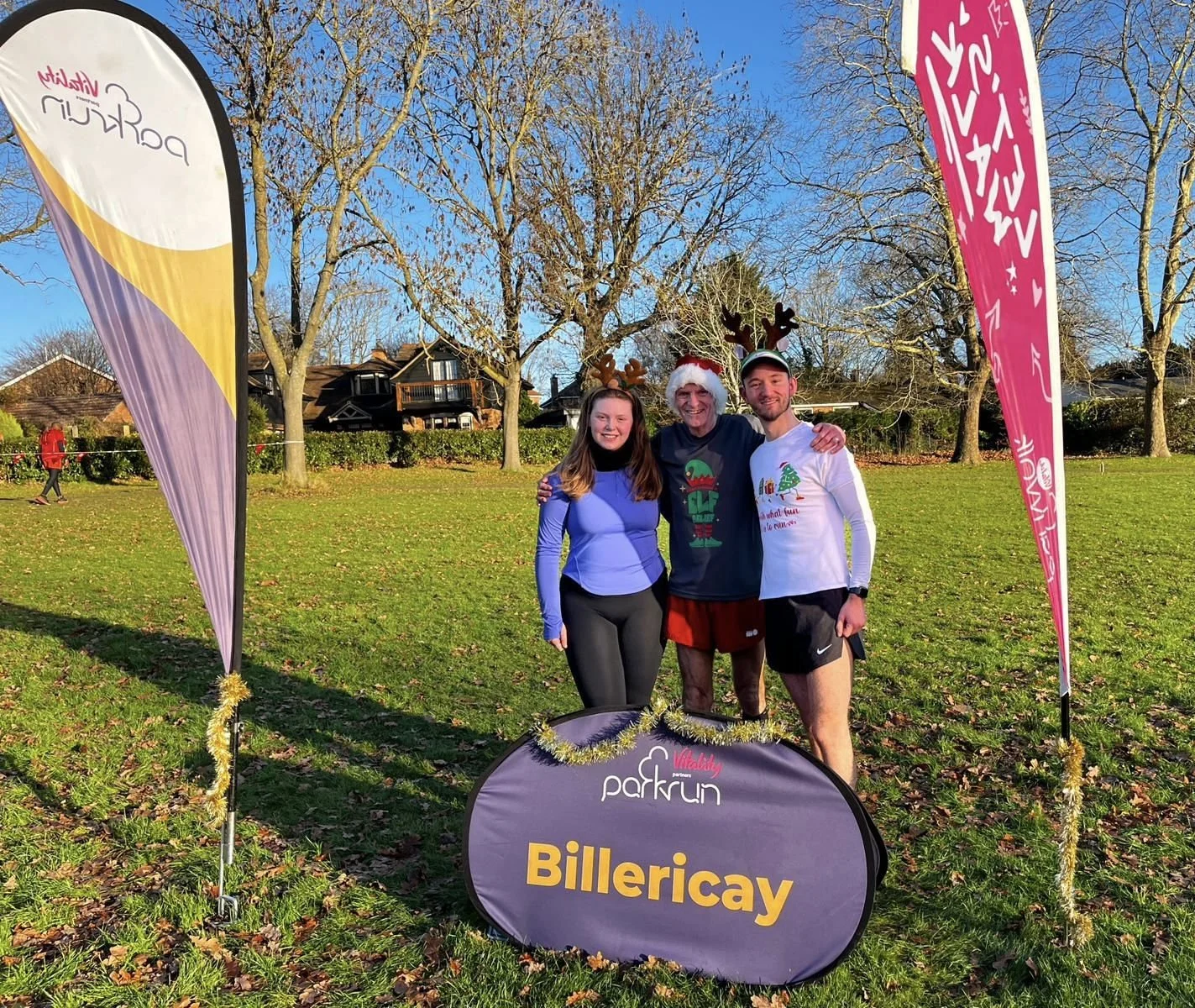
Martin Page at Billericay parkrun
Chelmsford Central - Louise Chappell 30:03 and Craig Chappell 30:04.
Highest BRR age gradings were Belinda Riches 67.99% For the women and Martin Page 76.67% for the men.
BRR parkrunners
Barking - John Mitchell 25:19, George Hiller 26:56, Stuart Burr 27:14, Andrew Hiller 32:18, Nikki Cranmer 38:08, Astrid Effendi 40:39 and Alan Murphy 51:37.
Colchester Castle - Belinda Riches 30:37, Barry Rowell 31:23, Steve Colloff 37:38 , Darren Graham 44.03 and Denise Graham 54:06.

Barry, Denise, Steve, Belinda and Darren at Colchester Castle parkrun
Great Notley - Gary Harford 30:22.
Moors Valley - Mark New 24:07.
Pegwell Bay - Rob Courtier 31:50.
Raphaels - Chandru Thayalan 25:54.
Rushmoor - Owen Wainhouse 22:28.
Severn Bridge - Joe Stacey 19:32 and Rosie Fforde 23:30.
Sheringham - Paul Ward 30:39.
Shrewsbury - Faye Spooner 30:31.
Tramore - Thomas Shorey 29:13 and Clodagh Shorey 32:01.
Highest BRR gradings were Rosie Fforde 64.04% for the ladies and Joe Stacey 68.34% for the men.
BRR Diary - December/January
Last chance - enter the Great Baddow 10 (17 May 2026) before Midnight on 31 December to enjoy the earlybird price of just £25. Baddow Races | 17th May 2026
The highlights of the coming weeks are listed below but you can see the full diary of BRR events on the TeamUp app. Simply download the TeamUp app to your phone, then enter the calendar key: ks67p21gt8p5gzdo66 when prompted. If you don’t want another app on your phone, you can also find it under the ‘events’ tab on the Barking Road Runners website: https://www.barkingroadrunners.org.uk/calendar.
There will be no track session on Tuesday 30 December. But, instead, you can try:
10.00am, Tuesday 30 December - Warrior Training Session. Meet at the car park, Ingrebourne Hill, Rainham Road, Rainham, RM13 8ST. Led by Rob Sargent from Ilford AC. It’s nice to run with our friends from Ilford and Dagenham 88 without seeing them as our rivals for a change.
9.00am, Thursday 1 January - NYD parkrun. In the absence of Valentines, we are favouring Harrow Lodge parkrun, as there is a nearby Wetherspoons for brunch afterwards! If you don’t fancy the mud, there are also parkruns at Raphaels and Wanstead (though the latter may be muddy too).
10.30am, Sunday 4 January - Epping Forest Orienteering. Theydon Bois Village Hall. Hosted by Chigwell and Epping Forest Orienteering Club. Just £7 to enter including a year’s free membership of the orienteering club and of British Orienteering, worth £30, if you use the QR code below. Entries close 2 January.

7.00pm, Tuesday 6 January - speed session. Jim Peters Stadium, Mayesbrook Park. Track will be back, with Rob’s timed mile session, followed by 300m repeats off 100m recovery. We may make you do a repeat of the 12 workouts of Christmas, as a warm-up.
Cracker Corner
A gingerbread man went to the doctor’s complaining of a sore knee. “A sore knee?” the doctor said. “Have you tried icing it?”
I got a universal remote control for Christmas. This changes everything.
What do you call an old snowman? Water.
Quote of the Week
“I’ve become a greedy b*****d – I always think I can win.”
Karsten Warholm
Just remember, Karsten, pride cometh before a fall, especially when you are a hurdler!
And Finally…
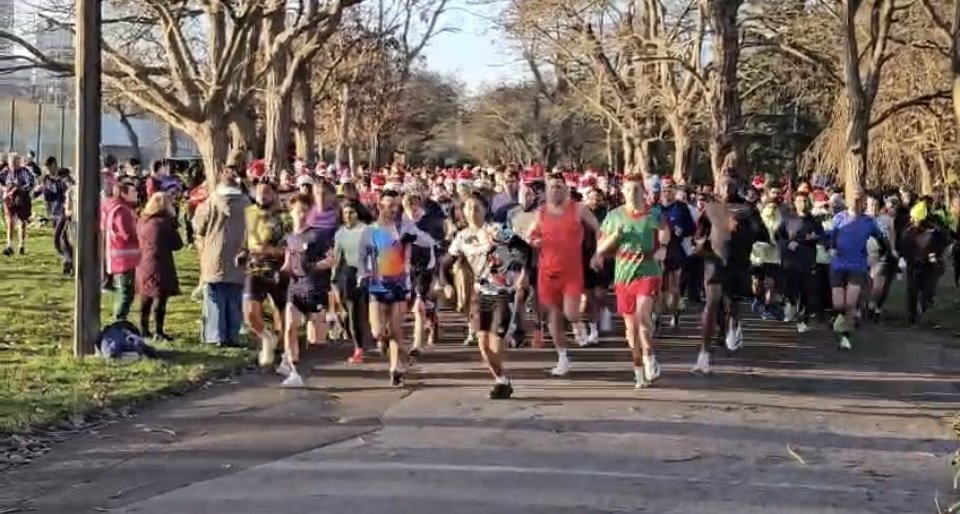
The crowd at Barking parkrun
The media was filled with record attendances at parkruns on Christmas Day, and we had our own record attendance at Barking parkrun, with 505 recorded finishers. The previous highest was 459 in 2024. We have come a long way since the first Christmas Day parkrun at Barking in 2012, which saw just 32 people cross the line (Malcolm Muir from Ilford AC was first across) and five volunteers. In the early years, we didn’t even set out the course, safe in the knowledge that only seasoned runners who knew their way around the park would be taking part; that has changed as numbers have gradually crept up. One thing is for certain: we’re going to need a bigger finish funnel…