BRR Blog - 13 April 2026
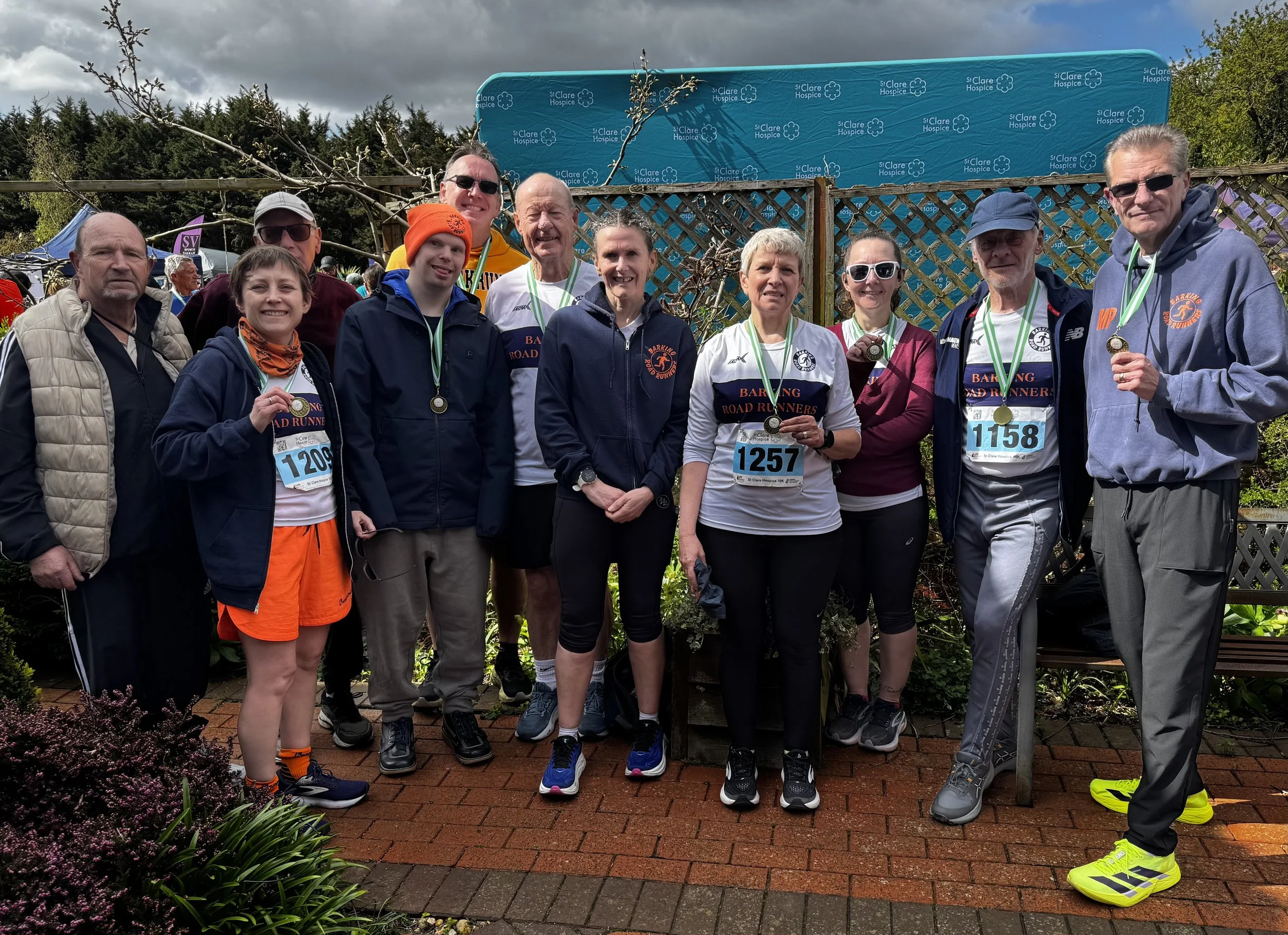
Some of the runners and supporters at the St. Clare 10k
Hello Road Runners!
We had a wonderful weekend of racing across a range of distances: the St. Clare’s Hospice 10k, the Thames Towpath 10, London Landmarks HM, and the Brighton Marathon. All the details below in Greg’s Race Report. For those of you with spring marathons still to come - they’re getting very close now!!!
Greg’s Race Report
Barking Road Runners had their second Grand Prix of this year’s eight round series at the St. Clare Hospice 10k this week, helping raise money for a worthy cause.
First finisher for BRR was Martin Page 45:32 followed by Paul Ward 54:03, Nikki Cranmer 57:57, Paul Manson 1:01:57, Mick Davison 1:04:08, Louise Chappell 1:04:41, Rob Courtier 1:05:39, Gary Harford 1:06:08, Alison Fryatt 1:16:23, Dawn Curtis 1:17:02 and Martin Mason 1:17:34.
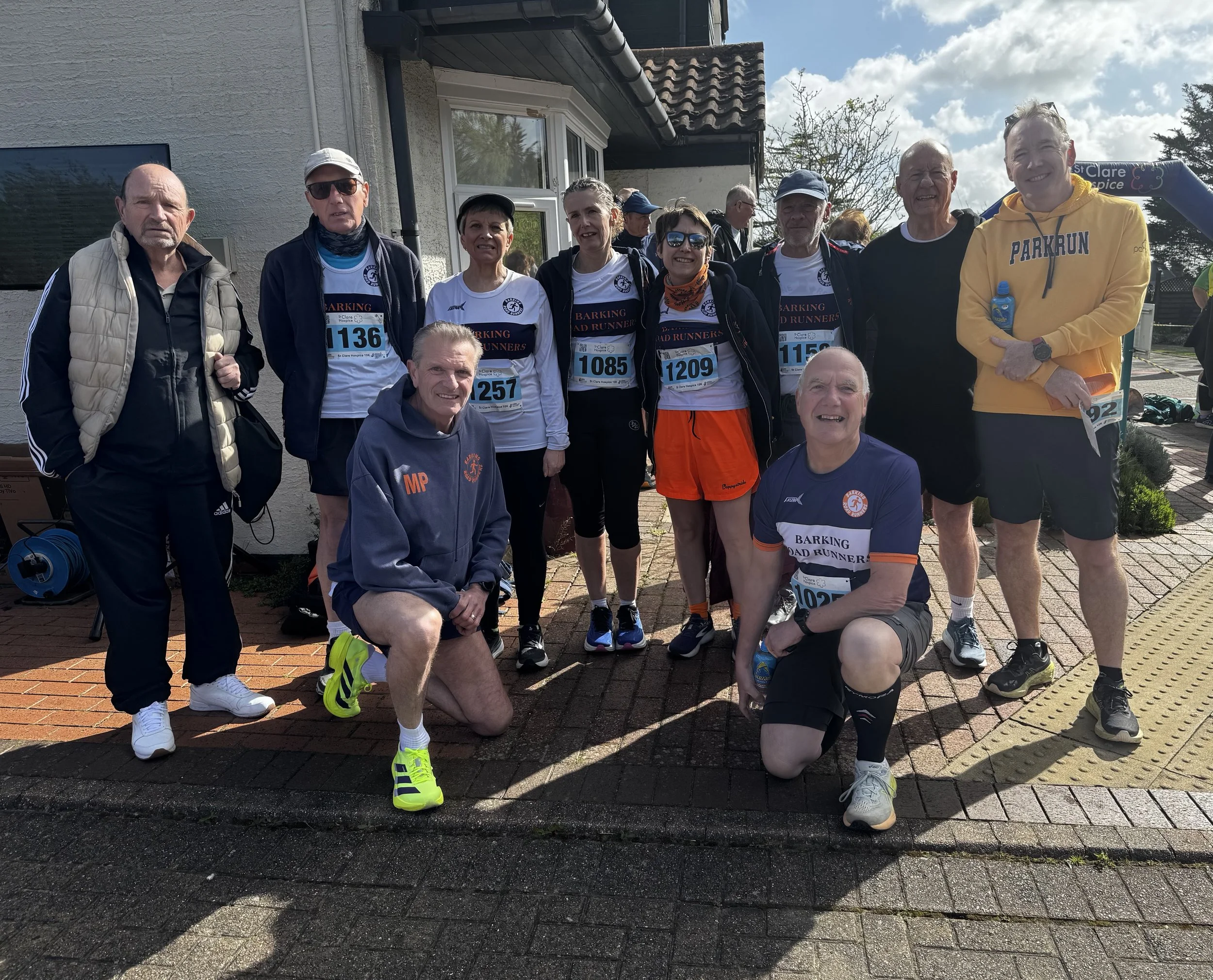
The pre-race photo at St Clare’s
BRR members also competed in other races over the weekend with James Lowndes finishing the Brighton Marathon in a fantastic time of 3:34:52.
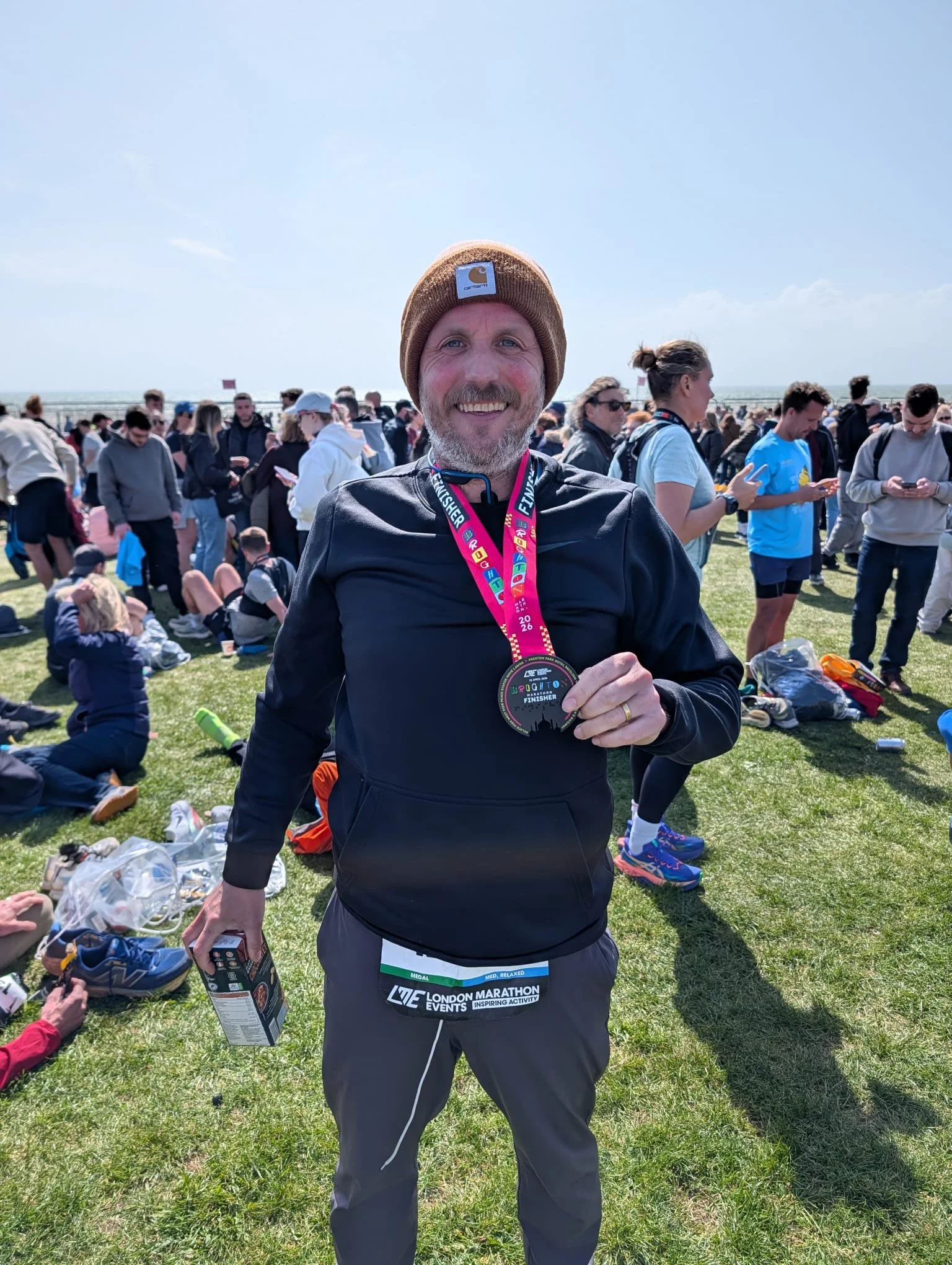
James L at the Brighton Marathon
At the London Landmarks Half Marathon, Joyce Golder and Stephanie Rashbrook finished in times of 2:09:59 and 2:39:36 respectively.
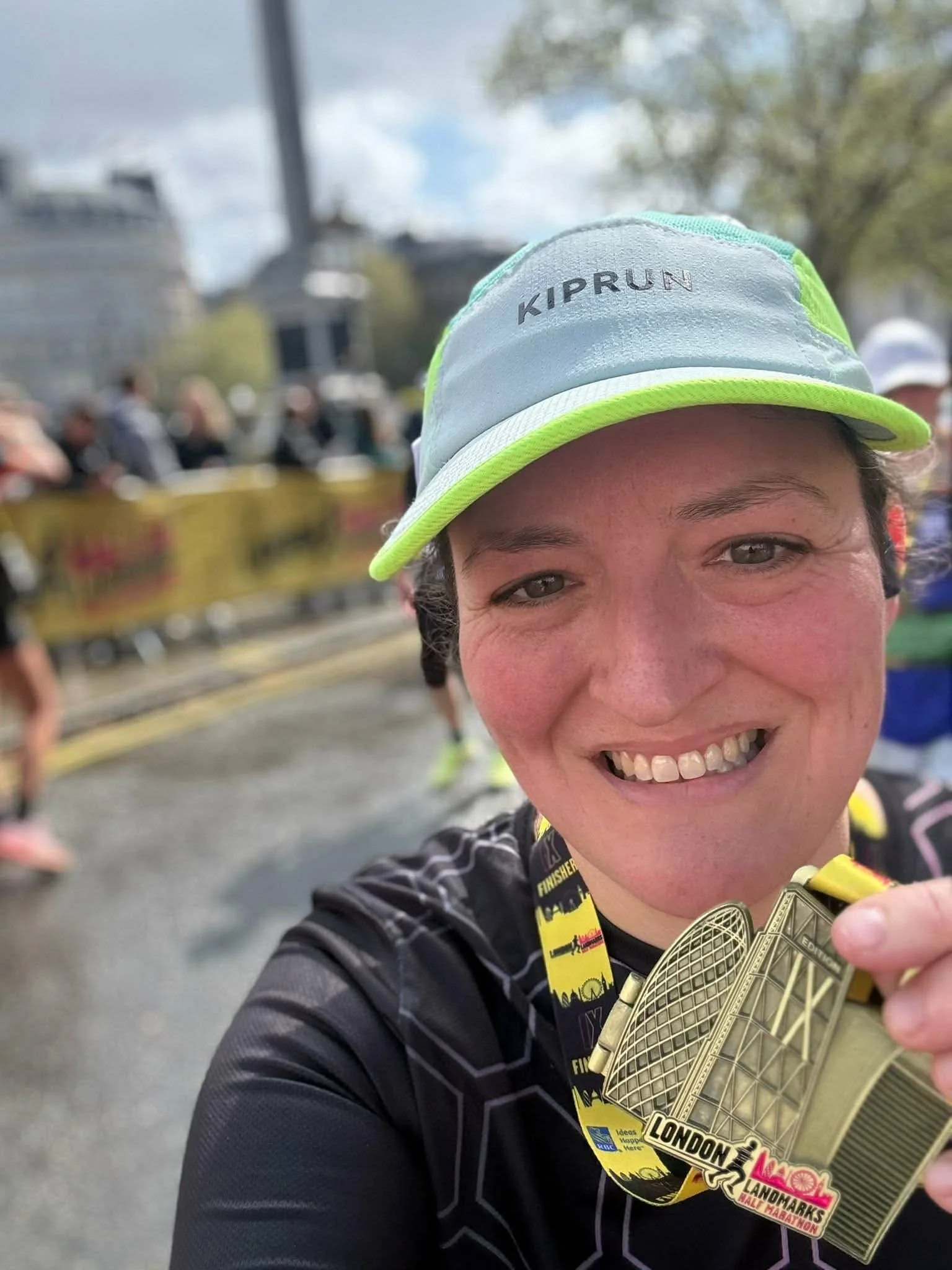
Stephanie after her London landmarks half marathon
At the Thames Towpath 10 mile race Belinda Riches finished in a time of 1:23:28 and Barry Rowell in 1:37:26.
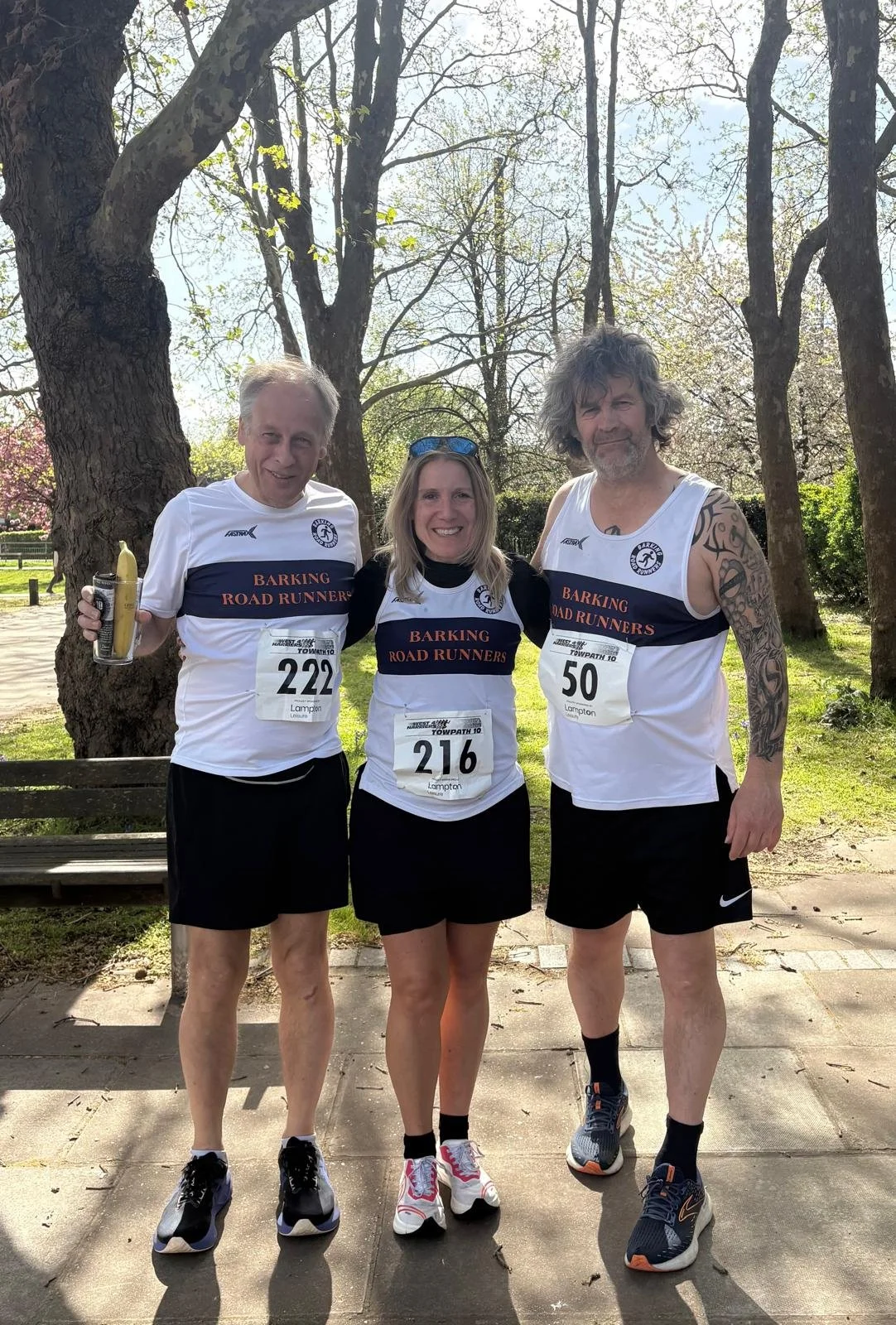
Barry and Belinda with Steve (and a banana) at the Thames Towpath 10.
BRR parkrunners
ARU Writtle - Vicky Groves 31:28, Nikki Cranmer 31:29, Louise Chappell 35:21, and Rob Courtier 36:26.
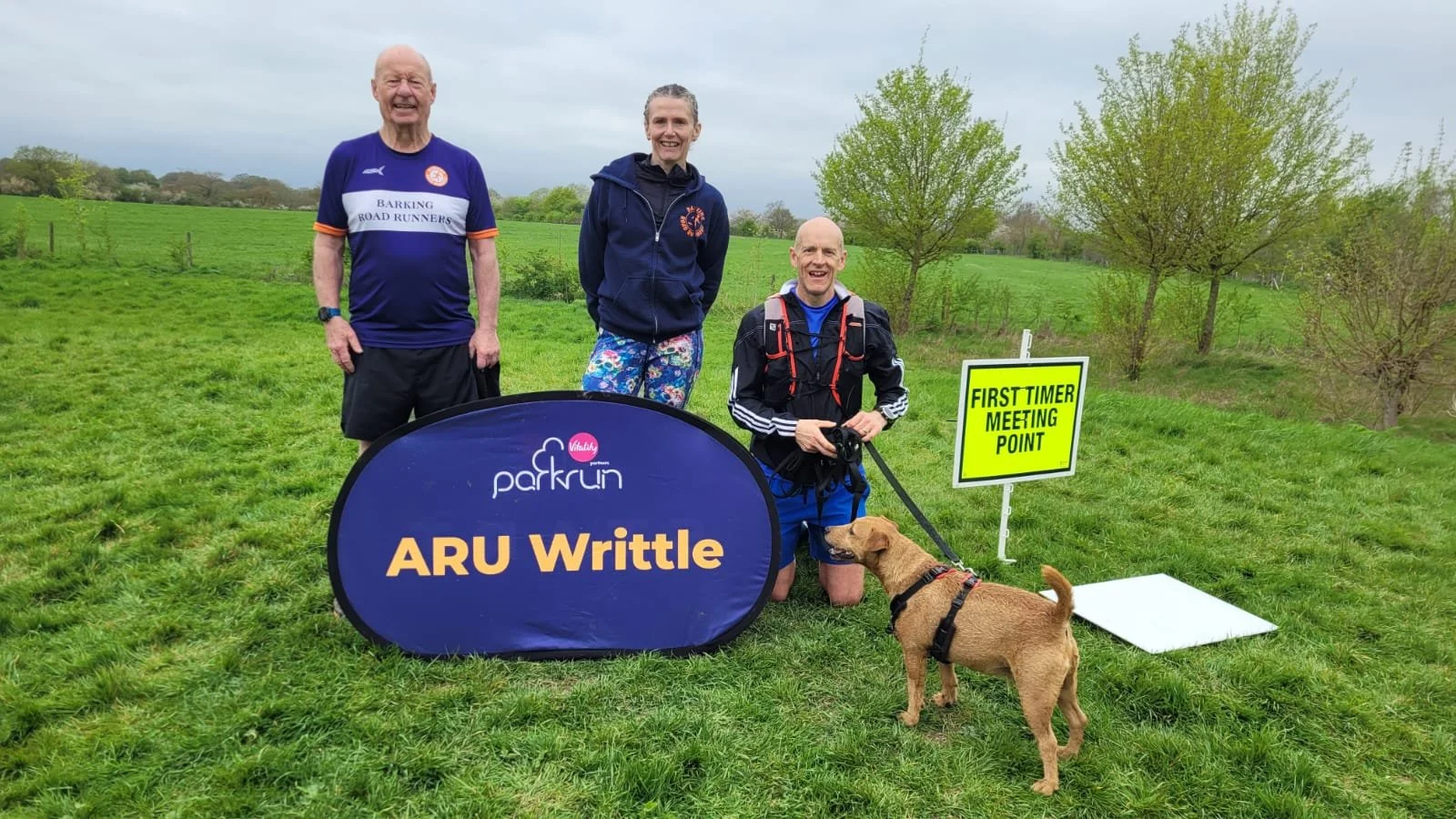
Rob and Nikki at ARU Writtle parkrun
Barking - Dominic Herring 20:33, Jack Stanford 21:22, Joshua Ezissi 22:06, Rory Burr 22:25, Shantelle Keech 22:35, Trevor Cooper 26:10, George Hiller 27:22, Stuart Burr 28:01, John Mitchell 31:13, James Sheridan 37:35 and Alan Murphy 49:01.
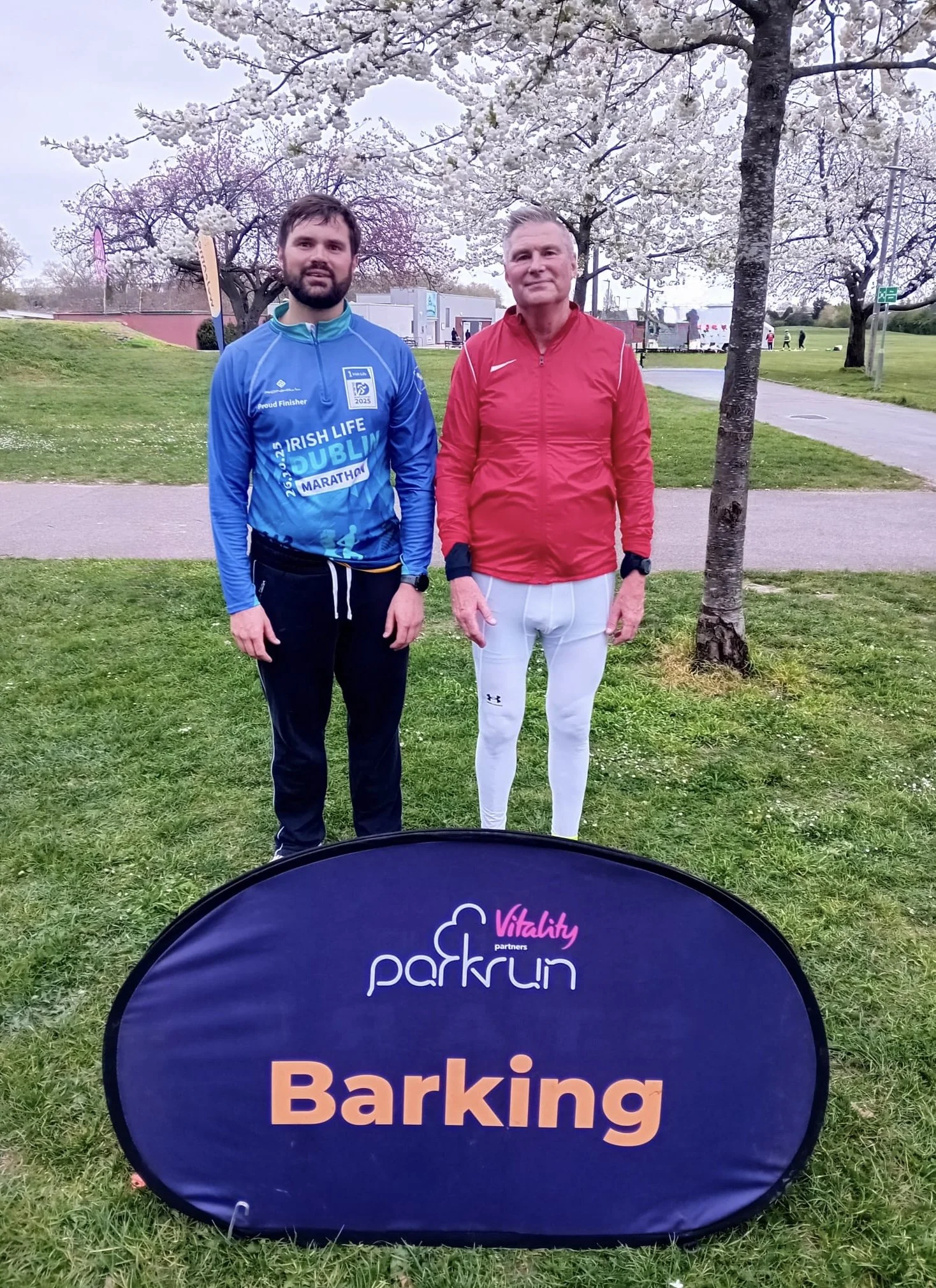
Rory and Stuart at Barking parkrun
Bournemouth - Mark New 24:47.
Ferry Meadows - Sunny Bulchandani 25:01.
Gunpowder - Paul Ward 25:56
Jubilee, Bedford - Belinda Riches 36:00, Darren Graham 35:59 and Denise Graham 57:10.
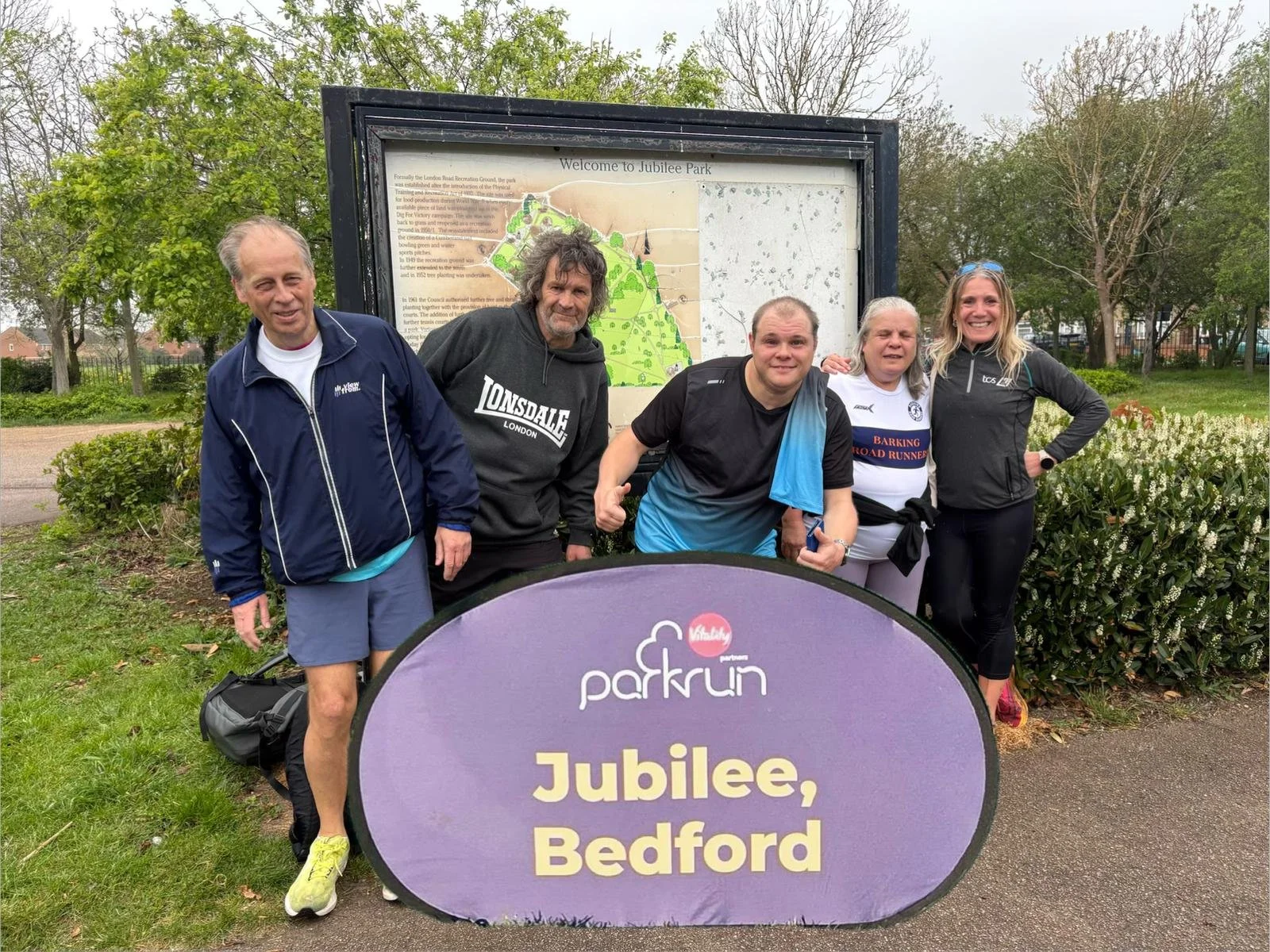
Barry, Steve C, Darren, Denise, and Belinda at Jubilee, Bedford parkrun
Raphaels - Doug King 25:28
Roding Valley - Paul Withyman 21:34.
Rugby - Chandru Thayalan 26:44.
Valentines - Richard Dudman 25:06, Kevin Wotton 25:08 and Andrew Gwilliam 53:26.
Wanstead Flats - Stuart Mackay 20:16.
Highest BRR age gradings this week were Shantelle Keech 65.54% for the women and Stuart Mackay 72.78% for the men.
BRR Diary - April
The highlights of the coming weeks are listed below but you can see the full diary of BRR events on the TeamUp app. Simply download the TeamUp app to your phone, then enter the calendar key: ks67p21gt8p5gzdo66 when prompted. If you don’t want another app on your phone, you can also find it under the ‘events’ tab on the Barking Road Runners website:https://www.barkingroadrunners.org.uk/calendar.
7.00pm, Tuesday 14 April - speed session. Jim Peters Stadium, Mayesbrook Park. This week we have a mixed‑interval track session combining short, fast efforts with longer sustained intervals to develop aerobic power, speed endurance and the ability to run well under fatigue:
4 × (70 seconds run, 60 seconds recovery)
4 × (3 minutes run, 90 seconds recovery)
4 × (70 seconds run, 60 seconds recovery)
The 70‑second efforts should feel fast and controlled, roughly around 3k–5k effort. The 3‑minute reps are best run at 10k pace or slightly quicker, steady and repeatable. Recoveries are deliberately short, encouraging aerobic adaptation.
This session is effective for runners targeting 5k, 10k or half‑marathon races but it also works well as a sharpening workout in the later stages of marathon preparation.
7.00pm, Thursday 16 April - Club road run. Castle Green Centre, Gale Street, Becontree. This week’s run is approx 4-miles through Barking Riverside (but avoiding Choats Manor Way, where Barry fell!):
Right from Castle Green Centre along Gale St, left A13, cross the road using the underpass and along Renwick Rd, left Choats Rd, right Northgate Rd, right Fielders Cres, right Merz Rd, left Renwick Rd/River Rd, right Handley Paige/Mallards Rd, right Galleons Dr, left Marine Dr, right Thames Rd, left Renwick Rd, cross the A13 and back to the Centre.
Saturday 18 April to Friday 24 April - Virtual Winter Handicap 07. The last run of the virtual competition. Can’t wait to see who the overall winner is!
11.00am, Wednesday 22 April - Ron’s 5k run. Barking Park, parkrun course. If you want to run your virtual handicap in company, and you are free during the day, do join in.
6.30pm, Friday 24 April - pre-London Marathon carb loading. China Friend, Longbridge Road. Come and join in a pre-LM nosh-up with your BRR friends, whether or not you are running London. We don’t book tables; just drop in from 6.30pm onwards.
Sunday 26 April - London Marathon. Volunteers to meet Dennis at Barking station at 8.00am to travel together, or earlybirds to arrive at 7.30am.
7.00pm, Friday 1 May - post-marathon get together. Side room (to left of the door), The Three Travellers, Wood Lane, Dagenham RM10 7DS. A chance to get together for a drink and chat, whether or not you have run a marathon or volunteered on the water station. There will be a small buffet.
Best Foot Forward

Foot injuries are frequent among runners. I guess it’s no surprise, when you consider that, when you run, your feet are subjected to forces around two to three times bodyweight with every stride. These injuries can affect bones, connective tissues, and muscles, such as metatarsal stress fractures, plantar fasciitis, and extensor tendonitis. To counteract these risks, incorporating targeted strength exercises for the calf, shin, ankle, and foot is key for building resilient feet and maintaining proper running form.
Before you begin, warm up your lower legs and feet with heel-to-toe walks and ankle circles. Then, try these eight exercises, ideally performed barefoot:
1. Single-Leg Balance: Stand on one leg with a straight (but not locked) knee for 30–60 seconds. Progress by closing your eyes or balancing on a soft surface.
2. Heel Walking: Lift your toes and walk forward on your heels for 20–30 metres. This strengthens the shins and helps prevent imbalances.
3. Toe Walking: Rise onto the balls of your feet and walk forward for 20–30 metres, working your calves and Achilles tendons. Rest and repeat back to starting position.
4. Toe Curls: Curl your toes towards your heel, making a fist with your foot. Hold for 2–3 seconds and repeat ten times per foot.
5. Toe Spreads: Stand with feet hip-width apart, spread your toes as wide as possible, hold for 2–3 seconds, and repeat ten times. This helps prevent bunions and nerve tightness.
6. Short Foot Exercise: With feet flat, raise your arch by drawing the base of your big toe towards your heel (without scrunching toes). Hold for 5 seconds, repeat 5–10 times.
7. Calf Raises with Big Toe Extension: Stand on a step, raise onto your toes, pressing through the big toe, then lower your heels below the step. Perform 10–20 reps and progress to single-leg raises.
8. Resistance Band Toe Flexion & Extension: Use a resistance band to flex and extend your toes, performing three sets of 12–20 reps per foot for both movements.
Integrating these exercises into your routine will enhance foot strength, promote healthy biomechanics, and help prevent injuries – keeping you running strong.
Zahra’s Uni Unload
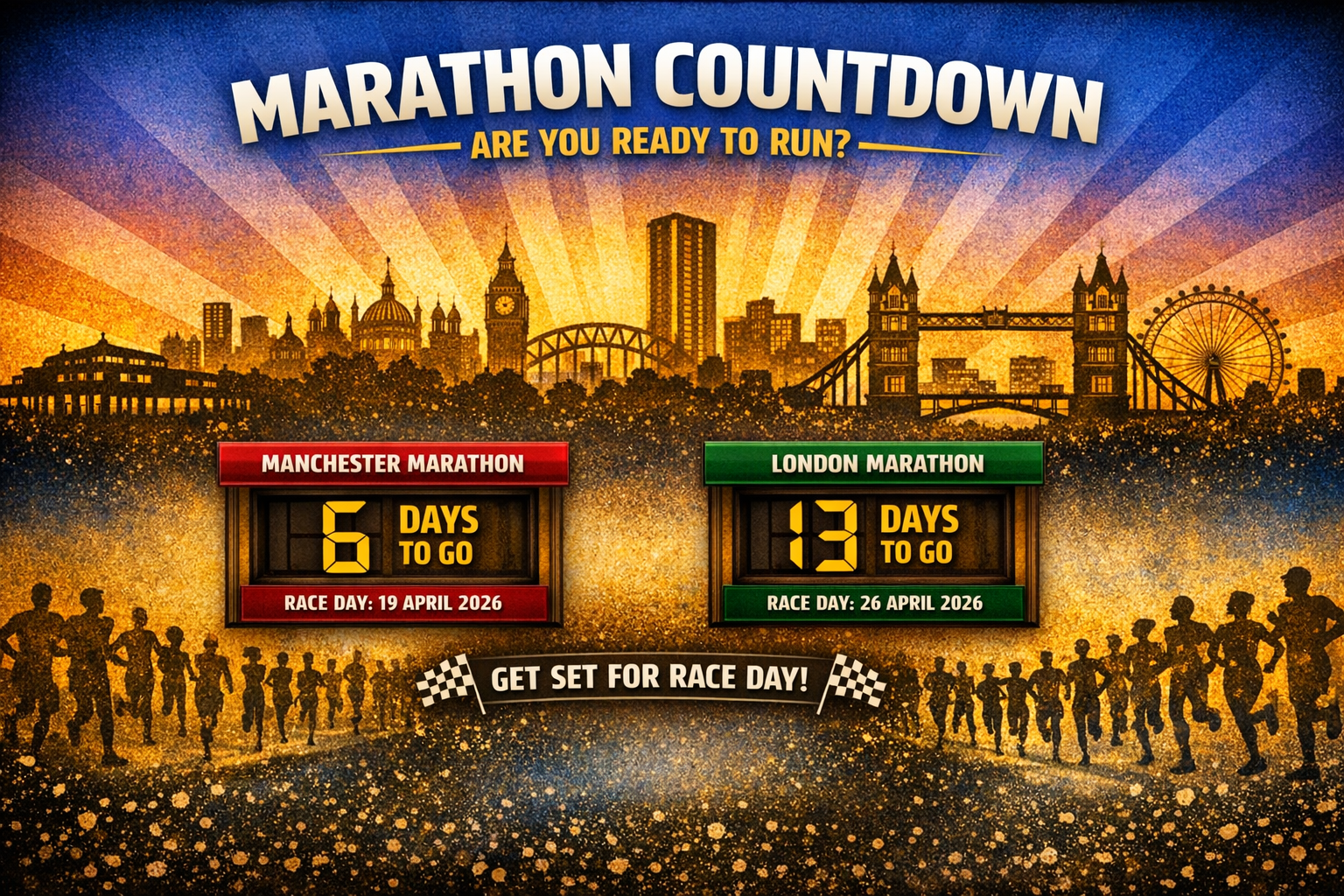
It's officially marathon season with Brighton just gone and Manchester (and Boston!) and London creeping closer but you've put in the miles and now it's time to taper. All the hard work is done but you still need to eat right especially the week before a marathon.
Days 7-4 you need a good balance of complex carbs, lean protein and healthy fats. Make sure you’re sipping water often but don't overdo it with hydration as that can also be bad.
Days 3-1 is when you want to be carb loading. To properly carb load you need to be starting 48-72 hours before your race so your muscles can fully saturate their glycogen stores. You need around 7-10 grams of carbs per kg of body weight when eating meals. Fibre intake needs to be reduced to prevent GI (gastrointestinal) issues so swapping whole grains for normal white carbohydrates. Also slightly increase your sodium intake, which can also be done through electrolytes, to pre-load your body to help retain fluids better and prevent dehydration. Also when you drink lots of water - especially if you’re exercising - take electrolytes otherwise you’re at risk of hyponatremia.
The day before your race you should eat boring plain foods and avoid veggies as they are high in fibre. Your biggest meal should be at lunch with a lighter dinner with some good options being things like pasta or a baked potato. The morning of your race eat something like oatmeal with honey or a bagel with jam and only take small sips of water not too much before your race. When you start running trust the fuelling you've practiced and have fun!
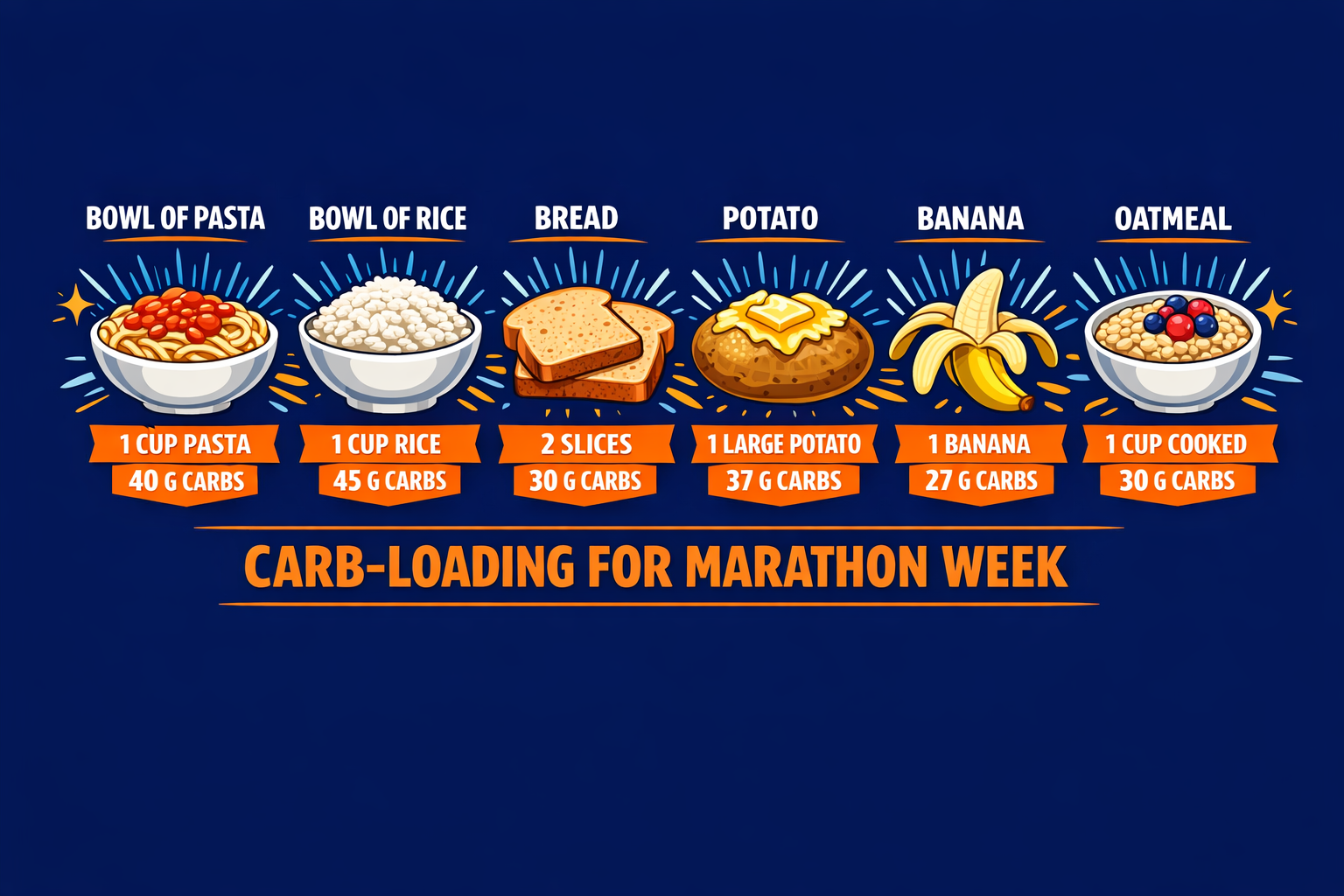
one cup = roughly 180-200g cooked weight
Quote of the Week
“Wisely and slow; they stumble that run fast.”
Friar Laurence, Romeo and Juliet, Act 2, Scene 3
(he wouldn’t have made a good coach)
And Finally…
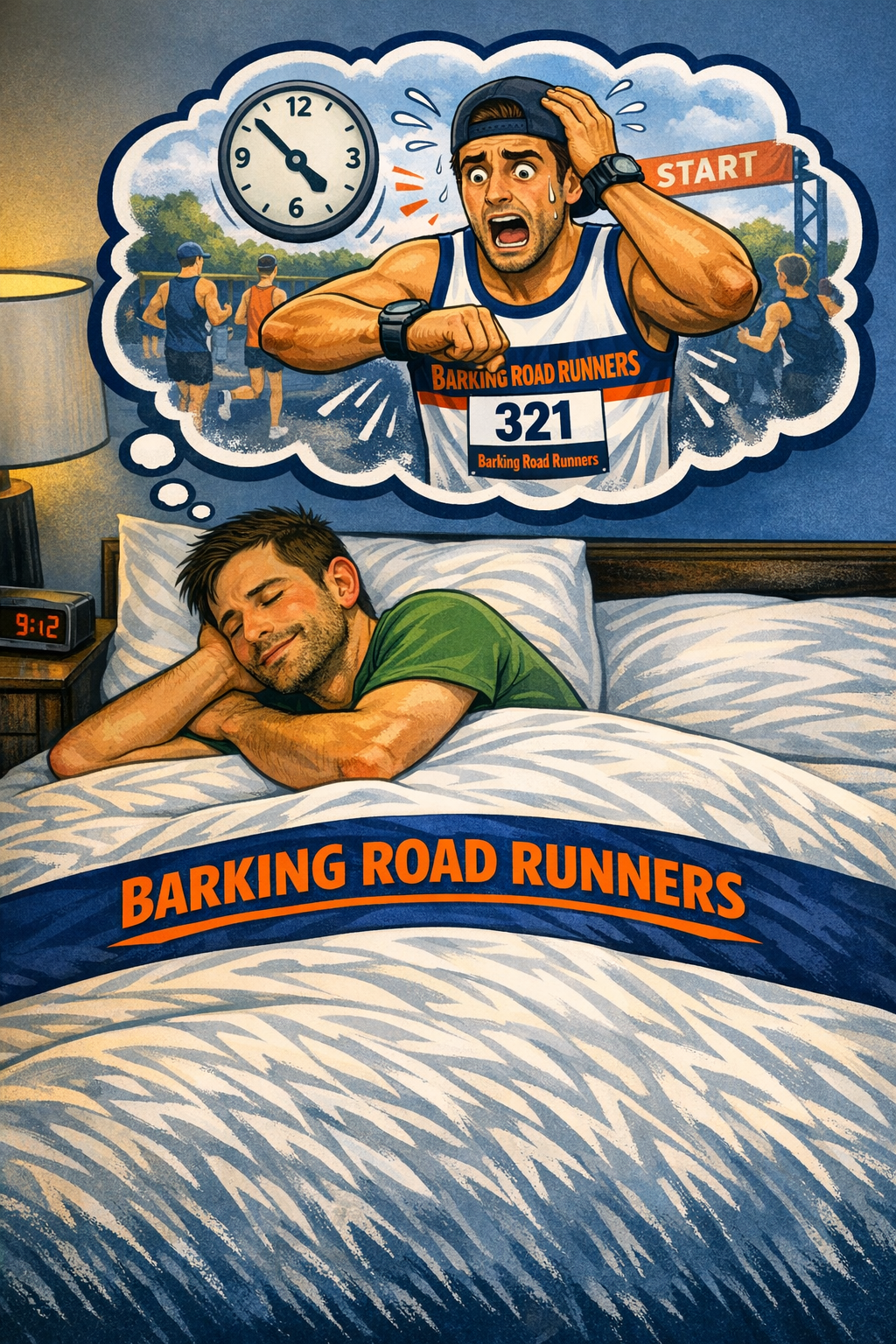
If you’ve ever jolted awake from a vivid dream where you’re late to a race, can’t find your kit, or your legs simply won’t move, you’re not alone. For runners, these familiar anxiety dreams often occur during REM sleep –and they’re actually a sign of something helpful going on.
REM (Rapid Eye Movement) sleep is the stage of sleep most associated with vivid dreaming. During REM sleep, the brain actively processes experiences from the day, particularly those that carry emotional weight. Training stress, pre‑race nerves, expectations, and personal goals all get replayed and reorganised overnight.
For runners, this explains why race‑related anxiety shows up so vividly in dreams. Your brain is essentially stress‑testing scenarios – rehearsing potential problems in a safe, offline environment. While these dreams can feel unsettling, they may help reduce anxiety when you’re awake by dulling the emotional charge of future stressors.
REM sleep is also important for motivation, confidence, and focus. It supports memory consolidation and helps integrate both physical and emotional learning. That mental sharpening can translate into better decision‑making on race day and a calmer response to pressure.
REM sleep dominates the second half of the night, which means cutting sleep short – early alarms, pre‑travel nerves, or late‑night scrolling – disproportionately reduces this valuable stage.
So if you’re dreaming about missed starts or heavy legs, don’t panic. Just make sure you learn from your REM sleep and be better prepared to run when it really counts. In the meantime, I want a Barking Road Runners duvet cover!