BRR Blog - 9 February 2026
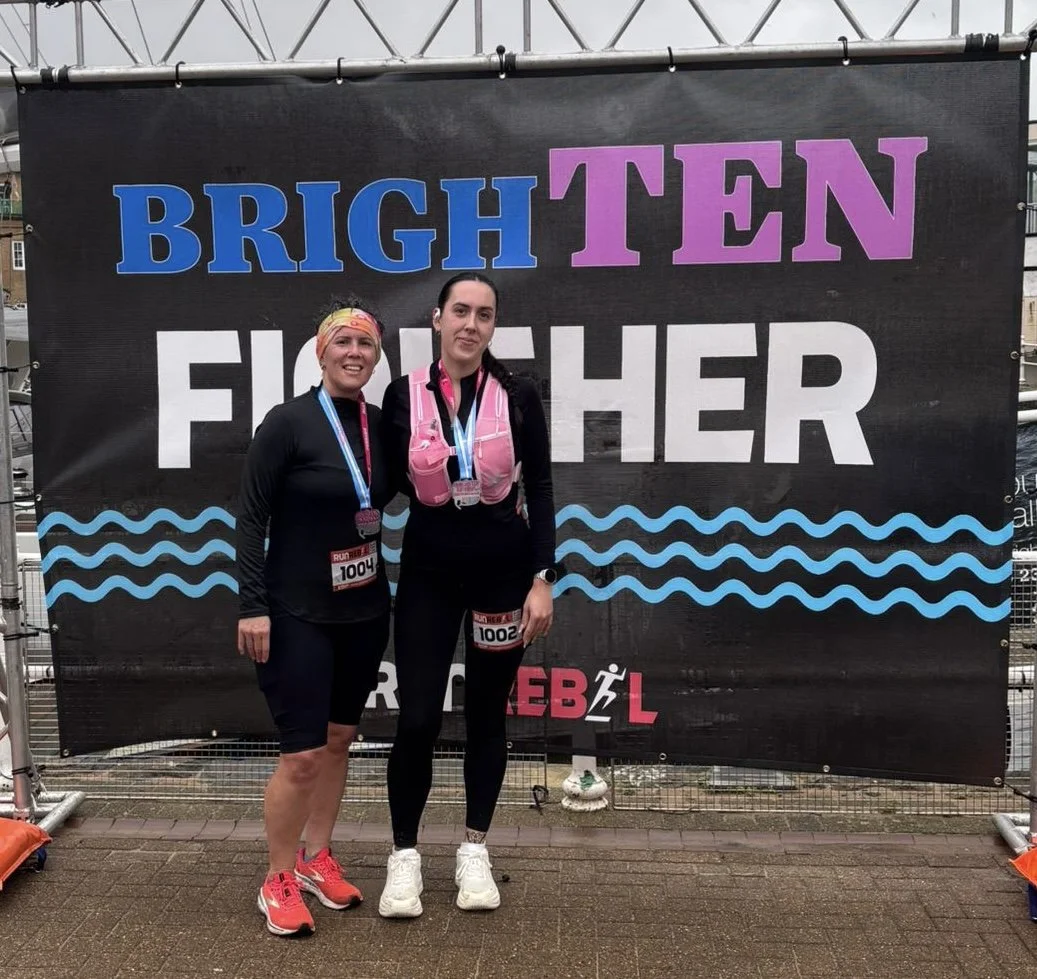
Joyce and her daughter at the Brighten Marina Run
Hi there, Road Runners
Anyone else fed up with the wet and miserable weather? I don’t mind the odd day of rain, but this is getting ridiculous. Fortunately, February is a bit of a quiet month for us, race-wise, although Joyce braved a 10-miler on Brighton Seafront. Otherwise, apart from parkruns and training, we can hunker down and look forward to the spring. Unless you’d like to join me at the Hadleigh Legacy 10k, of course…
Greg’s Race Round-Up
After last week’s busy schedule it was a very quiet weekend this time for Barking Road Runners with only Joyce Golder participating in a race. The event Joyce ran was the BrighTen Marina 10 mile race in which she finished in a time of 1:44:52. Starting in the heart of Brighton Marina, the 10‑mile route takes participants along the dramatic Marina Wall—jutting out to sea—before continuing east on the scenic Undercliff Path toward Rottingdean, with chalk cliffs and crashing waves as the backdrop. Runners then climb to the Overcliff for sweeping views of the English Channel and Brighton skyline, finishing back at the Marina with its lively atmosphere to collect a bespoke medal.
BRR parkrunners
Barking - Jason Suddaby 22:35, Jack Stanford 22:43, Dominic Herring 24:01, Mark New 24:49, Jason Li 28:30, Nikki Cranmer 28:47, John Mitchell 30:07, James Sheridan 32:08, Martin Mason 35:43, Les Jay 50:04 and Alan Murphy 51:25.
Basildon - Ron Vialls 26:34.
Billericay - Martin Page 22:27.
Crystal Palace - Rory Burr 23:50.

Rory at Crystal Palace parkrun
Great Dunham - Sunny Bulchandani 24:40.
Great Notley - Gary Harford 31:10.
Gunpowder - Chandru Thayalan 26:39.
Highcliffe Beach - Rob Courtier 36:58.
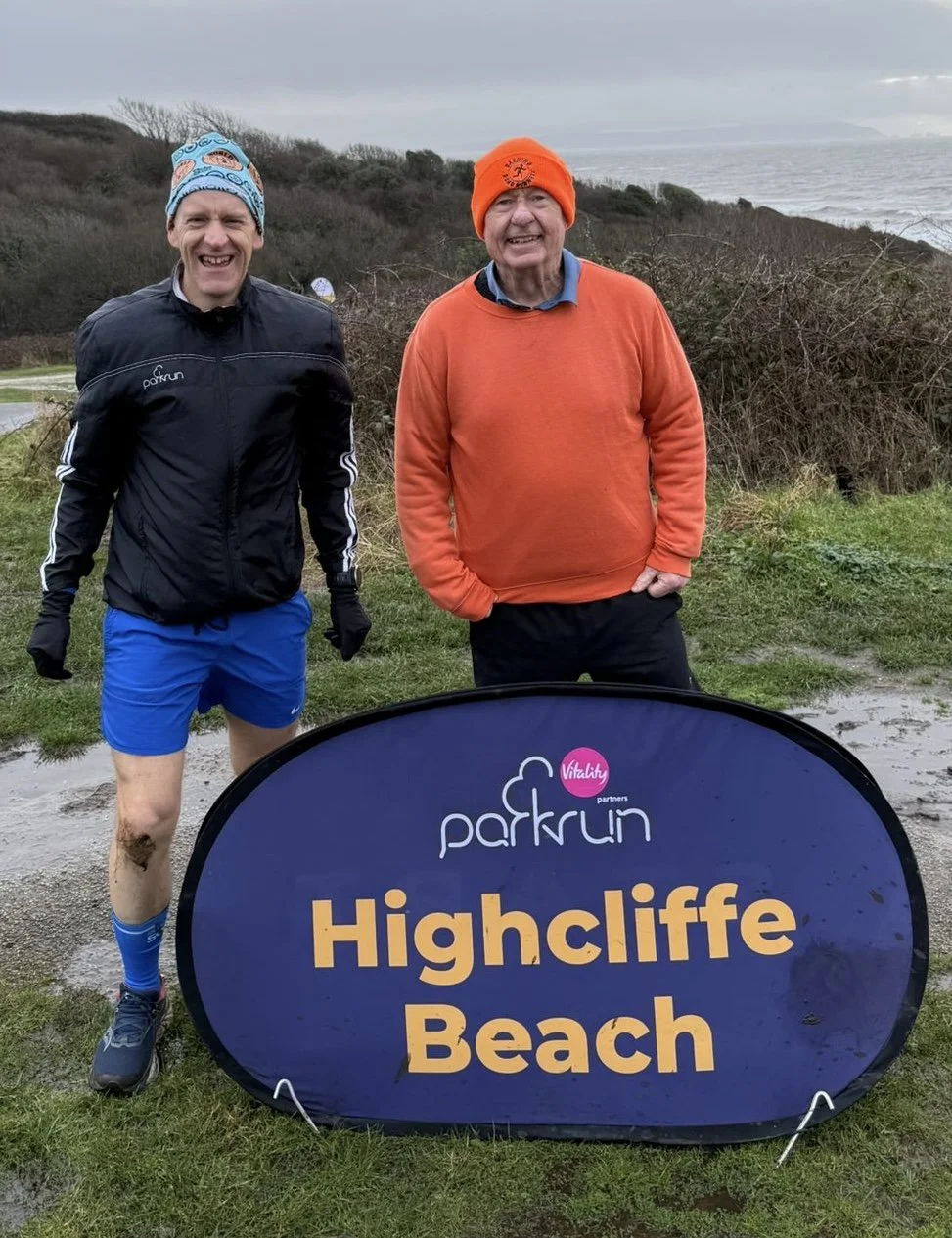
Rob and friend at Highcliffe Beach
Hillsborough - Rosie Fforde 24:13.
Holkham - Owen Wainhouse 22:10.
Sutcliffe - Barry Rowell 29:14, Steve Colloff 33:37 and Belinda Riches 48:01.
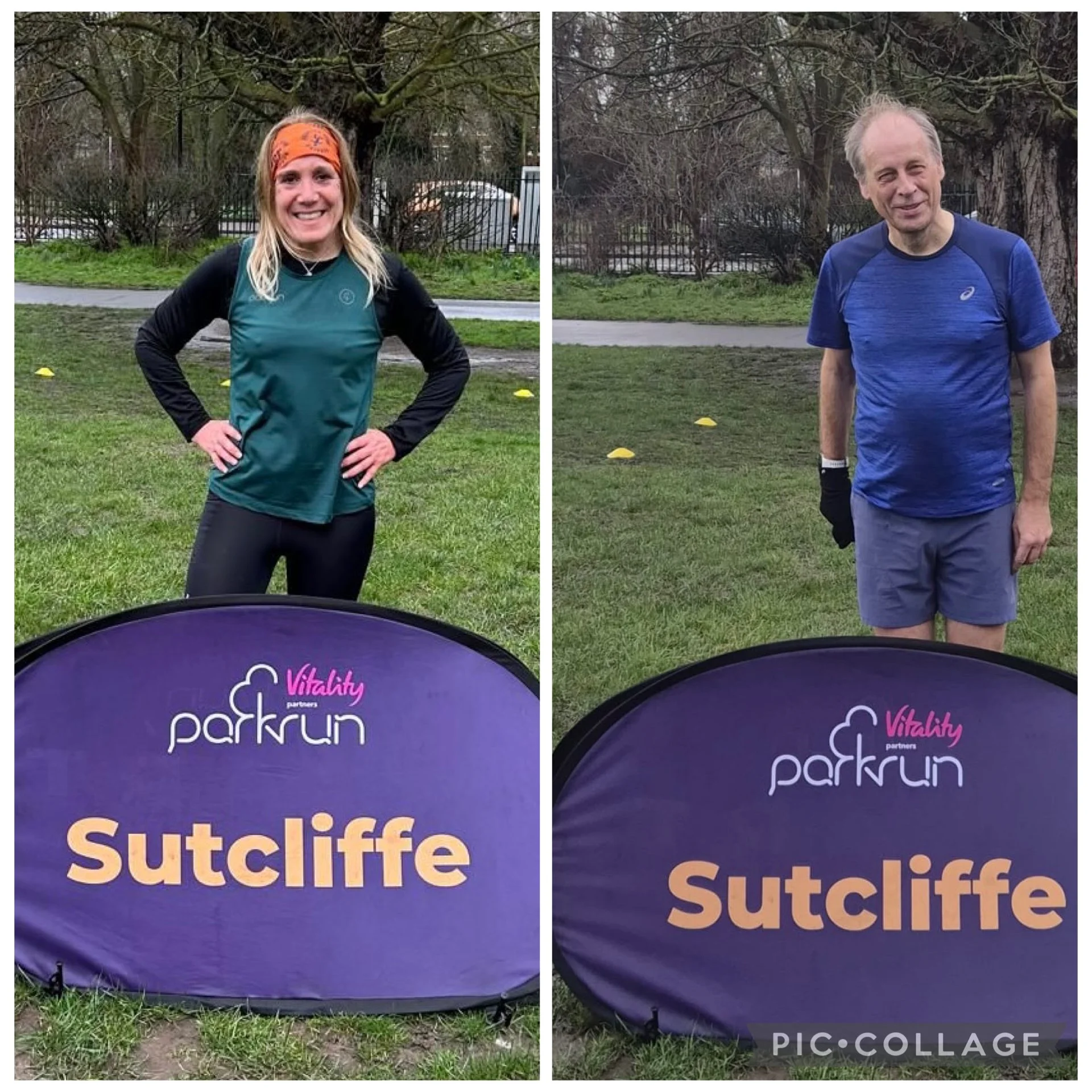
Belinda and Barry at Sutcliffe parkrun
Valentines - Kevin Wotton 25:13 and Richard Dudman 27:57.
Highest BRR age gradings this week were Nikki Cranmer 88% for the women and Martin Page 76.84% for the men.
BRR Diary - February
The highlights of the coming weeks are listed below but you can see the full diary of BRR events on the TeamUp app. Simply download the TeamUp app to your phone, then enter the calendar key: ks67p21gt8p5gzdo66 when prompted. If you don’t want another app on your phone, you can also find it under the ‘events’ tab on the Barking Road Runners website: https://www.barkingroadrunners.org.uk/calendar.
Saturday 7 February - Friday 13 February - Virtual Winter Handicap 02. Remember to post evidence of your time by close of play on Friday.
7.00pm, Tuesday 10 February - speed session. Jim Peters Stadium, Mayesbrook Park. Thank you to everyone who voted in the poll to decide this week’s track session. There was a very clear winner; it seems you don’t mind running for a bit longer, as long as you get a decent recovery time inbetween:
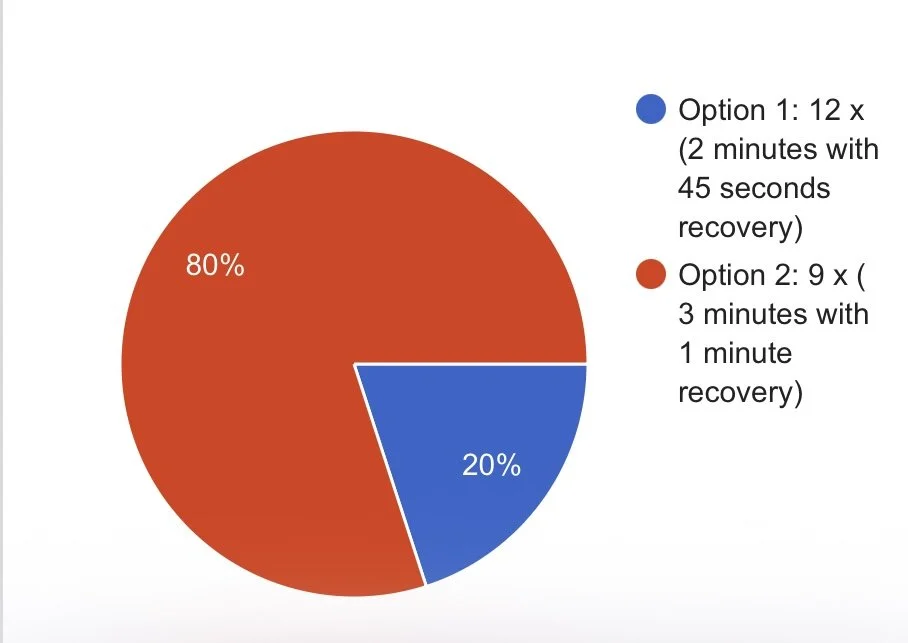
Tuesday’s track session, by popular demand
11.00am, Wednesday 11 February - Ron’s 5k run. Barking Park, parkrun course. A chance to post your winter handicap time, with some company to push you on.
7.00pm, Thursday 12 February - Road Run. Castle Green Centre, Gale Street, Dagenham. All abilities welcome. This week we have a file-mile route: Left out of Centre along Gale Street, left Woodward Road, right Lodge Avenue, right Porters Avenue, right Parsloes Avenue, right Heathway, right Goresbrook Road, left Gales Street to Centre.
10.30am, Sunday 22 February, 10:30 - Hadleigh Legacy 10k. Hadleigh Country Park, Chapel Lane, Hadleigh, Essex, SS7 2PP. If you’re missing cross-country already, why not sign-up for this 10k race featuring tough hills and plenty of mud? Sign up at: Nice Work Race Management : Hadleigh Legacy 10k
Saturday 21 February - Friday 27 February - Virtual Winter Handicap 03.
Nutty but Nice

If you are a fan of a certain chocolate hazelnut spread, you may be interested in the results of the latest Which? Magazine taste test.
Nutella, the Nation’s bestseller, whilst scoring highly for taste (81%), was just pipped at the post by Waitrose own-brand (82%), which was also 20p per 100g cheaper (63p compared to 83p). Best the Tesco own-brand also scored high for taste (81%) and was even better value at 41p per 100g. If you shop at the discount supermarkets, choose Lidl over Aldi. Lidl’s spread scored a creditable 80% in the taste test whilst costing the same as Tesco, but Aldi scored a dismal 62%, putting it at the bottom of the league table.
Just remember, tasty as it is, the inclusion of hazelnuts doesn’t make it a health food…Talking of which:
Incredible Creatine?

There have been lots of wonder foods and supplements touted in the media over the years, but it seems like creatine could be the real deal.
Creatine is a natural compound found primarily in your muscles and brain, where it plays a central role in energy production. While small amounts come from foods such as red meat and seafood, your body also produces about one gram per day through the kidneys and pancreas. Because nearly 95% of creatine is stored in muscle, it acts as a rapid energy source during physical activity, supporting strength, power, and overall performance.
Although taking creatine supplements has long been associated with athletes, particularly those in sports requiring explosive power like weightlifting and sprinting, research now shows it offers significant health benefits for older adults as well. One of the most important is its ability to counteract sarcopenia—the age‑related loss of muscle mass, bone density, and physical strength that comes with age. Studies demonstrate that creatine supplementation, especially when paired with resistance training, can increase lean muscle, improve lower‑body strength, and even reduce the risk of falls and fractures.
Beyond muscle support, emerging evidence suggests that creatine supplementation can enhance memory and combat age‑related cognitive decline, particularly in adults ages 66–76, but the evidence available so far isn’t conclusive.
There has been safety concerns around creatine in the past, but large reviews of over 500 studies confirm it is safe for healthy adults, including older people, when taken at recommended doses (3–5 grams per day). It does not act like a steroid, nor does it cause kidney damage, dehydration, or muscle cramps in healthy users. Taking too much can cause stomach problems and is a waste of time and money anyway, as there is a limit to how much creatine your body can store and any excess once your muscles are saturated will just be excreted when you go to the loo.
It is not a miracle worker; experts emphasise that creatine works best alongside a balanced diet and regular strength training.
🏃♀️A-Z of running
Episode twenty-six in the A-Z of running, and this week we have reached Z, the final letter of the alphabet (sob). Don’t worry, I’ll be starting a new 10-part series soon.
Zero‑Drop Shoes - Running shoes with 0mm heel‑to‑toe drop, encouraging a natural footstrike. Can reduce heel‑strike loading but may require adaptation for some runners.
Zig‑Zag Run - A drill involving repeated changes of direction in a zig‑zag pattern to improve agility, balance, and neuromuscular coordination. I remember trying to do this as a drill at track once. It was chaos - we must try it again!
Zombie Run - A themed fun run involving “zombies” or, informally, a runner’s joking term for a run completed while feeling very tired.
Zonal Training - A structured method of training based on heart‑rate or power “zones” to target specific physiological benefits. Commonly ranges from Z1 to Z5, with extended systems including Z6 and Z7, but there are lots of different zonal training methods, so they can vary slightly.
Z1 (Zone 1) Training - The easiest training zone, typically 50–60% of maximum heart rate (MHR). Very light, gentle effort used for warm‑ups, cool‑downs, recovery runs, or relaxed aerobic conditioning. Breathing remains easy and the pace feels effortless.
Z2 (Zone 2) Training - Steady aerobic training at 60–70% of MHR. Conversational pace that builds endurance, improves fat utilisation, and strengthens aerobic capacity.
Z3 (Zone 3) Training - Moderate to moderately hard effort at 70-80% of MHR —sometimes called “tempo‑light.” Falls between aerobic and threshold pace and helps improve aerobic strength and lactate tolerance.
Z4 (Zone 4) Training - Hard effort near lactate threshold, usually sustainable for short blocks (e.g., 10–20 minutes) at 80-90% of MHR. Develops speed endurance and supports strong race‑pace running.
Z5 (Zone 5) Training - Very high‑intensity, near‑maximal effort (90-100% of MHR) used for VO₂ max training. Short intervals designed to boost cardiovascular capacity and running economy.
Z6 (Zone 6) Training - An anaerobic capacity zone involving extremely hard efforts—typically 110–120% of VO₂ max pace or near‑all‑out sprinting for 10–30 seconds. Trains maximal speed, power, and lactate tolerance. Requires long recovery periods between reps.
Z7 (Zone 7) Training - The pure sprinting or neuromuscular power zone: maximum‑effort bursts of 5–10 seconds at full speed. Used to develop peak explosiveness, stride power, and neuromuscular efficiency. Common in track sprint training.
Zone Out Running - A relaxed, meditative run where the runner drifts into a calm, steady rhythm and focuses less on pace and more on mental flow. Sounds like my kind of run.
5 Tips to Improve Your Running Cadence
Improving your running cadence—the number of steps you take per minute—can make your stride more efficient, reduce injury risk, and help you maintain smoother, more consistent pacing. While there’s no single “perfect” number for everyone, many runners benefit from gradually increasing their cadence to reduce overstriding and improve form. Here are five practical tips to help you get there:
1. Establish Your Baseline
Before you try to increase your cadence, measure it during an easy run. Most running watches can show your current cadence, but you can also manually count how many times one foot hits the ground in 30 seconds and double it. Knowing your starting point helps you set realistic goals.
2. Aim for Small, Gradual Increases
A common mistake is trying to jump straight to 180 steps per minute. Instead, aim for a 5% increase at a time. Incremental changes help your muscles adapt and prevent strain.
3. Use a Metronome or Cadence‑Based Playlists
Running to a consistent beat can make cadence improvements feel natural. Many apps and playlists offer beats per minute (BPM) tracks you can match to your target cadence.
4. Shorten Your Stride, Don’t Speed Up Your Run
Higher cadence doesn’t mean running faster. Instead, think about taking slightly quicker, lighter steps. This often naturally reduces overstriding and helps improve posture and foot landing.
5. Practice Cadence Drills
Incorporate short cadence‑focused intervals into your weekly training plan. For example, during an easy run, spend 1–2 minutes focusing on a quicker step rate, then return to a relaxed pace. Repeat a few times until it feels comfortable.
Cracker Corner
I’ve just bought a racing cat but it doesn’t always abide by the rules. It’s a cheetah.
Did you hear about the dog that would eat nothing but garlic? His bark was worse than his bite.
What do you get when you cross a ball of wool and a kangaroo? A woolly jumper.
Quote of the Week
‘He said you’re not a bad little runner. Why not come along to the athletics club.’
Steve Cram
on when he was first spotted as as a young runner
And finally
As you’ll be well aware, last week saw the release of more than three million investigative files by the U.S. Department of Justice (DOJ) concerning Jeffrey Epstein, the disgraced financier and convicted sex offender. Amongst all the revelations was a curious running-related tale involving Epstein’s accountant, Richard Kahn, and his participation in the New York City Marathon in 2015 and 2016.
Kahn, who had been training for the 2015 race, found he had missed the official charity registration deadline set by the New York Road Runners (NYRR). Undeterred, he managed to acquire a race bib under an alias—Francois Claude, a 28-year-old Belgian—and informed Epstein’s former assistant, Lesley Groff, of this in an email which has now been released. Kahn even provided details on how to track his progress via the marathon app, using either his bib number or his assumed identity. Groff provided encouragement, suggesting that Kahn simply run as the other participant and not “make waves”.
Kahn went on to complete the marathon in 3 hours, 32 minutes, and 19 seconds, finishing well within the top 5,000 out of approximately 50,000 runners. The following year, he joined a friend for seven miles of the race, this time without a bib number at all “to gain some more experience.” Not sure that someone who can run a marathon in three and a half hours needs more experience!
According to NYRR rules, using another runner’s bib or participating under false registration is strictly prohibited, like in the UK, with potential consequences including disqualification, suspension, or even a ban from future events. Kahn’s actions, now brought to light through the DOJ files, serve as a reminder of the importance of registering properly for a race – who knows when your details could be released to the world?