BRR Blog - 12 January 2026
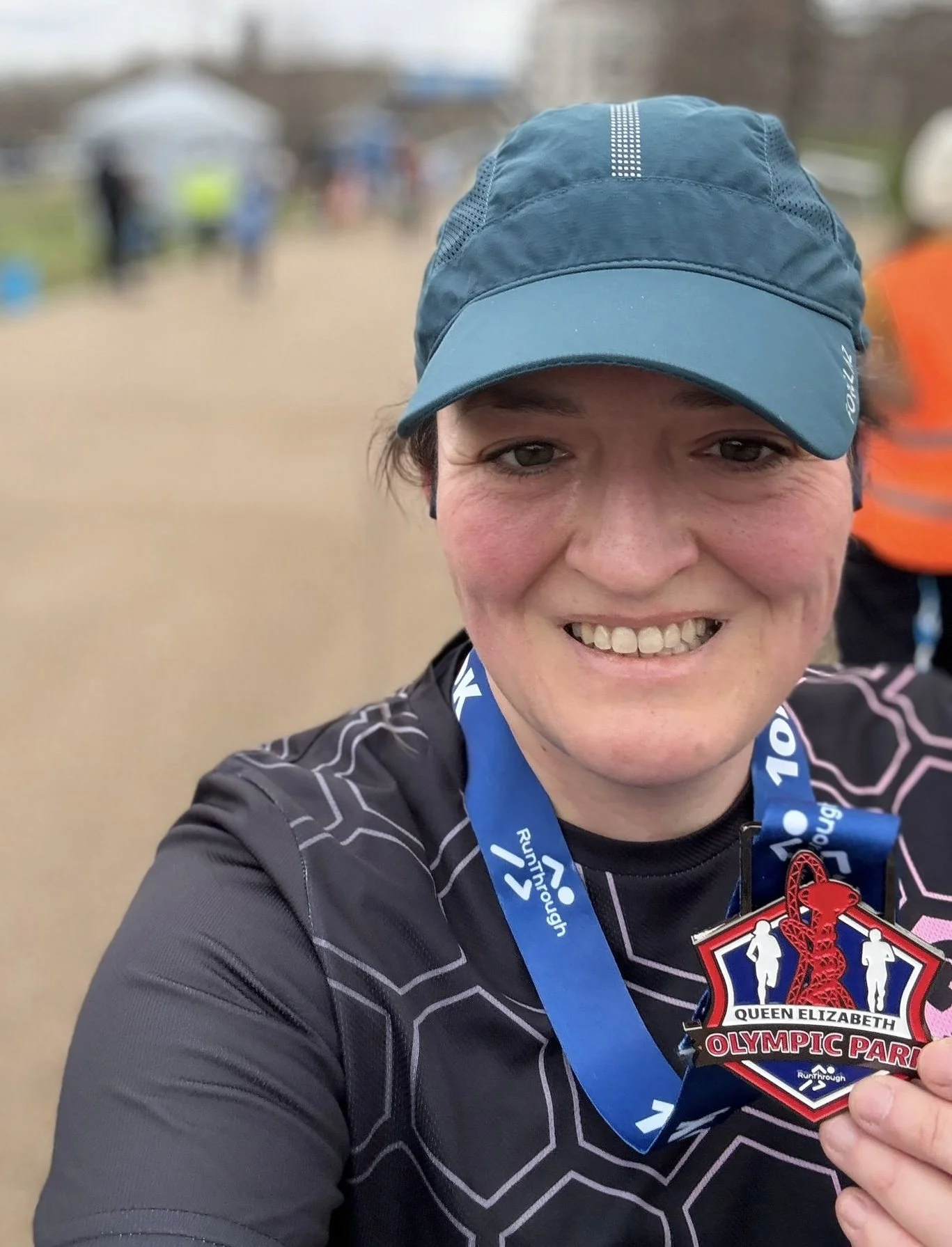
Steph with her medal after her 10k at the Olympic Park
Hello Road Runners!
It was a quiet weekend for official races, with only Steph lacing up her running shoes in anger. But a lot of you have been busy recording your starting times for the virtual 5k handicap. If you haven’t done yours yet, and you are free during the day on Wednesday, why not go along to Barking Park and join in Ron’s Run? It is on the Barking parkrun course, so perfect for a fast and furious 5k.
The virtual handicap and Ron’s Run dates are listed below, as are the races that we have already agreed for this year’s Grand Prix. And don’t forget we have the next Chingford League race, in Epping Forest, next Saturday. Dates of all confirmed BRR events are also in our TeamUp app - details in the BRR diary.
Winter (Handicap) is Coming
In case you missed it on WhatsApp, the 2026 Virtual Winter Handicap, organised by Dennis, will kick off on Saturday 10 January. If you are new to the virtual competition, it consists of eight virtual events, a fortnight apart. You will have a week to record and post evidence (e.g. a screenshot of your watch or of a relevant parkrun result) of your 5k run time. Runs must be continuous i.e. five fast 1ks with a rest in between is not allowed.
The first week will being used to set your handicap for the rest of the competition (I’m sure Dennis will adjust any suspiciously low handicap times). After that, your finish time for each event will be adjusted to reflect your handicap, with the winner being the person with the fastest adjusted time. Times posted late will not be accepted. It will all make sense when you see it in action, I promise.
HC01 - 10/01 -16/01 (handicap setting week)
HC02 - 24/01 - 30/01
HC03 - 07/02 - 13/02
HC04 - 21/02 - 27/02
HC05 - 07/03 - 13/03
HC06 - 21/03 - 27/03
HC07 - 04/04 - 10/04
HC08 - 18/04 - 24/04
Ron’s Runs
Ron’s fortnightly 5k runs in Barking Park start on Wednesday 14 January at 11.00am. Your time can be used for the Virtual Winter Handicap. The Big Friendly Cafe in the park lives up to its name and allows clothes and bags to left there for safe keeping (though, obviously, avoid leaving valuables). And you can round off your run with a nice cup of tea or coffee afterwards.
Future dates, all on Wednesday and starting at 11.00am, are:
28 January
11 February
25 February
11 March
25 March
8 April
Grand Prix 2026

The races that will form part of our 2026 Grand Prix are slowly being decided, as more race dates are confirmed. The Grand Prix competition consists of eight races, including at least one 5-mile, 10k, 10-mile and half-marathon race, usually between March and October. Points will be awarded for finishing positions on the basis of 100 for first place, 99 for second and so on, with separate points awarded for male and female finishing positions. The final score for each member will be calculated using their best five results across the eight races. Trophies will be awarded to male and female, for first, second, and third place.
GP races confirmed so far are:
GP01 - Sunday 1 March - The London Half (https://www.runthrough.co.uk/event/london-half-10k-presented-by-trek-march-2026)
GP02 - Sunday 12 April - St. Claire 10k (St Clare 10k 2026 - St Clare Hospice)
GP03 - Sunday 17 May - Great Baddow 10 (baddowraces.co.uk). Ther may be another race before…
Sunday 5 July - Felsted 10k (http://nice-work.org.uk/e/felsted-10k-14657)
Sunday 6 September - The Big Half (Big Half | London Marathon Events) - sold out but there are still a few Club places available for £25 each. First come, first served.
I expect we will also select the Ingatestone 5 (miles) and the Tiptree 10 (miles), when dates become available, as races of those distances are few and far between.
Zahra’s Uni Unload

When you go to buy some new running trainers you might notice that there's two most common types of shoes, neutral and stability. This is because of something called pronation. Pronation is the way your foot rolls in to act as a shock absorber as you’re running. When your foot only rolls in slightly and you land on your heel you have neutral pronation which is ideal. However, there is also under and over pronation. Over pronation is when your foot rolls inwards too much. This is normally due to flat arches and puts pressure on your big toe and can lead to knee pain, which is why people who have over pronation should wear stability shoes to help the arches and relieve some pressure. Under pronation is when your foot stays on the outside edge so you don't absorb impact as well. It is normally people who have high arches that under pronate. If you have under pronation you should wear trainers that are neutral but cushioned to help with extra shock absorption.
Body Battery: What it Means and How to Improve It

The latest in my occasional series ‘what on earth does that feature on my Garmin watch mean?’
If you use a Garmin watch, you’ve probably seen your Body Battery score — a number from 0 to 100 that reflects how much energy you have available. It usually rises overnight while you sleep and drops throughout the day as you work, exercise, and deal with stress. But what does this number actually represent?
How Body Battery Works
Body Battery is Garmin’s way of turning your biometric data into an easy‑to‑understand energy gauge. It uses information such as:
Daily activity (walking, workouts, general movement)
Sleep quality and duration
Rest and recovery periods (shown by lower heart rate)
Stress levels, estimated using heart rate and heart rate variability
All of this is processed through Garmin’s Firstbeat Analytics system to estimate how “charged” or drained you are.
What Counts as a Good or Bad Score?
A high Body Battery (typically 70–100) suggests you’re well‑rested and ready for demanding tasks — whether that’s a tough workout or a busy day. If you still have plenty of energy left by bedtime, it may be a sign you could comfortably take on more activity.
A low score (below 30) means your body is struggling to recover. You can still be active, but it’s wise to lower your expectations and avoid pushing for personal bests. Low morning scores often point to poor sleep, high stress, alcohol, illness, or recovery from intense training.
How to Improve Your Body Battery
The biggest factor is sleep. Most adults need seven to nine hours of good‑quality rest to recharge fully. Reducing stress, spacing out intense workouts, limiting alcohol, and avoiding overstimulation (like long social events if you find them draining) can also help.
For a quick boost, try a short relaxation break or a 20–30 minute nap. Over time, balancing effort with proper recovery will make your Body Battery more resilient — and your days feel easier to handle.
A-Z of Running
Episode twenty-two in the A-Z of running, and this week it is brought to you by the letter ‘V.’
Variable Pace - A training style where the runner intentionally changes speed throughout the workout. A good example of this is fartlek (“speed play”) sessions where you alternate easy, moderate, and fast running.
VAT - no, not Value-Added Tax, but Ventilatory Anaerobic Threshold. This is the point during running at which breathing becomes more laboured because the body begins producing more lactate than it can clear. Often close to tempo pace.
VDOT (Jack Daniels’ Running Formula Score). A measure developed by coach Jack Daniels that represents a runner’s aerobic fitness level and helps prescribe training paces. Example: A VDOT of 40 suggests a 5K time around 22:30 and specific paces for easy, threshold, and interval runs.
Vertical Oscillation - The degree to which a runner moves up and down with each stride. Lower is generally more efficient as you want to use your energy moving forward rather than going up and down! Many GPS watches track vertical oscillation in centimetres. See the 24 November blog for more info about vertical oscillation.
Vertical Ratio - A metric comparing vertical oscillation to stride length, used to assess running efficiency.
Lower ratios indicate better energy use.
VO₂ Max (Maximal Oxygen Uptake) - A measure of how much oxygen your body can use during intense exercise. Higher VO₂ max generally correlates with better endurance performance. Elite marathoners often have VO₂ max values above 70 ml/kg/min.
VO₂ Max Intervals - High‑intensity interval training (HIIT) designed to improve VO₂ max. Example: 5 × 3 minutes hard (at ~5K pace) with equal recovery.
(Training) Volume - The total amount of running in a given period. It can be measured as time spent running or total distance ran e.g. weekly mileage. Whichever metric you use, the key is to increase volume gradually; the rule of thumb is around 10% a week. Avoid all the increase in mileage being in a single run, as evidence suggests that increases the risk of injury.
Vulnerable Zones - these are injury‑prone areas i.e. body parts that commonly experience strain in runners, such as the knees, Achilles tendons, plantar fascia, and hips.
VVO₂ Max (Velocity at VO₂ Max) - the speed at which a runner reaches their VO₂ max. Useful for calculating interval training paces. Example: If your VVO₂ max is 4:00/km, intervals might target that pace.
Greg’s Race Report
No league races for Barking Road Runners this week but Stephanie Rashbrook competed in the Runthrough 10k at the Queen Elizabeth Olympic Park at the weekend finishing in a time of 1:09:33.
Plenty of BRR members ran various local parkrun and, in the case of Jess Collett and Stuart Mackay, not so local. Jess and Stuart did theirs in Sydney, Australia. There were some good runs from the members with Belinda Riches and Martin Page having the highest respective age gradings this week for the women and the men.
BRR parkrunners
Barking - Chandru Thayalan 24:54, Mark New 25:18, Doug King 26:19, Stuart Burr 26:53, Nikki Cranmer 29:03, John Lang 30:16, Tom Shorey 31:32, Joyce Golder 31:44, Jason Li 31:46, Clodagh Shorey 32:04, Rob Courtier 32:11, Dennis Spencer Perkins 34:16, Martin Mason 34:25, Astrid Effendi 41:47 and Alan Murphy 51:31. In addition, Mick Moohan volunteered for the 350th time.
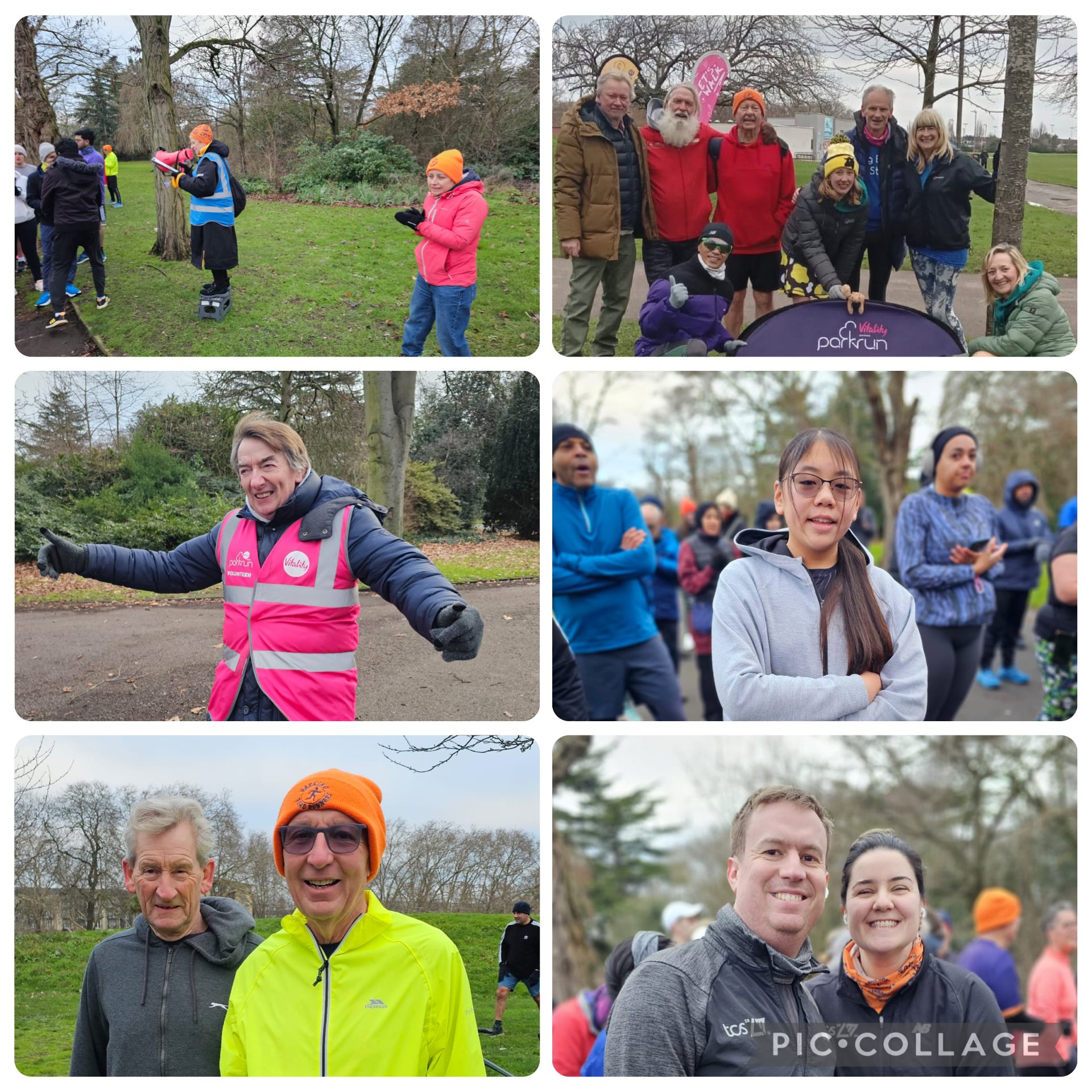
BRR members and friends at Barking parkrun
Brentwood - Martin Page 24:52, Belinda Riches 27:03, Ron Vialls 27:22, Barry Rowell 34:08, Steve Colloff 37:47, Darren Graham 53:45 and Denise Graham 60:28.
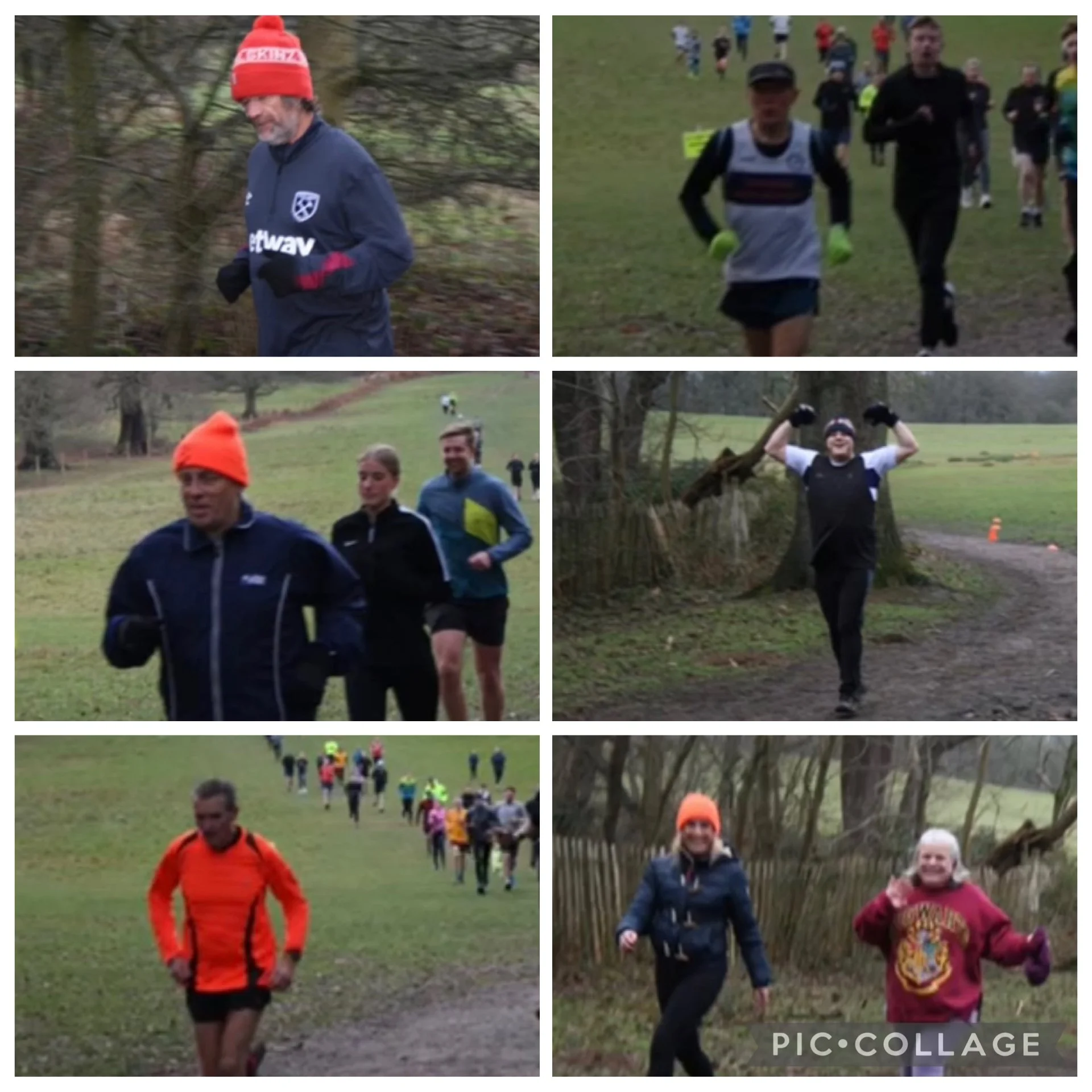
BRR participants at Brentwood
Chelmsford Central - Gary Harford 28:33.
Ferry Meadows - Sunny Bulchandani 24:10.
Harrow Lodge - Rory Burr 25:20.
Pirrama (Australia) - Stuart Mackay 22:22 and Jess Collett 26:05.
Valentines - Kevin Wotton 25:10, Richard Dudman 27:52, Colin Jones 29:05, John Mitchell 32:42 and Andrew Gwilliam 52:16.
Wendover Woods - Joe Stacey 20:33.
Highest BRR age gradings this week were Belinda Riches 65.19% for the women and Martin Page 69.37% for the men.
BRR Diary - January
The highlights of the coming weeks are listed below but you can see the full diary of BRR events on the TeamUp app. Simply download the TeamUp app to your phone, then enter the calendar key: ks67p21gt8p5gzdo66 when prompted. If you don’t want another app on your phone, you can also find it under the ‘events’ tab on the Barking Road Runners website: https://www.barkingroadrunners.org.uk/calendar.
Saturday 10 January -Friday 16 January - Virtual Winter Handicap 01. This one is to set your handicap time for the rest of the competition. No cheating or you will be given an extra-hard handicap time!
7.00pm, Tuesday 13 January - speed session. Jim Peters Stadium, Mayesbrook Park. Zahra will be taking the session this week and it is ‘Toblerone’ matched pairs. Two sets of:
1 min run 1 min rec
2 min run 2 min rec
3 min run 3 min rec
2 min run 2 min rec
1 min run 1 min rec
7.00pm, Thursday 15 January - Road Run. Castle Green Centre, Gale Street, Dagenham. A social run around the roads of Barking and Dagenham, usually around four miles. Faster runners loop back for those who aren’t so quick, so nobody gets left behind.
11.00am, Saturday 17 January - Chingford League 05. Orion Harriers Club House, Jubilee Retreat, Bury Rd, London E4 7QJ. A tough 8k/5-mile cross-country race with plenty of hills, but with spectacular views over London at some points. Free entry for BRR members. Leave plenty of time to walk from the Club House to the race start, and bring your bib number if you have one. If you are coming by public transport, it is the Weaver Line to Chingford. If you are driving, there is no parking at race HQ. Parking at Chingford Plain (charges apply) or you may find parking on surrounding streets. Showers, lockers, toilets and a good range of hot and cold refreshments are available at HQ after the race. There should be an update regarding conditions underfoot the day before the race, on the Chingford League Facebook page.
Saturday 24 January - Friday 30 January - Virtual Winter Handicap 02.
10.00am, Sunday 25 January - SECCL 04. Wild Forest Obstacle Activity Centre, Parsonage Farm, Kelvedon Hatch, Brentwood, Essex, CM15 0LA. Fourth race in the South Essex Cross Country League competition, organised by Nuclear Striders. Expect one or two water features if it has been wet. Entry is normally £5 but BRR members pay only £3. Then, straight back for…
2.00pm, Sunday 25 January - Barking versus the Builders football match. Football pitch by Barking Bus Garage, South Park Drive. The honour of BRR is at stake - can we beat the builders this time?
Cracker Corner
Did you hear what happened to the cannibal lion? He had to swallow his pride.
My friend’s cat swallowed a pound coin. The vet bill was huge, but at least there was money in the kitty.
My other friend’s dog swallowed a roll of film. It was OK; nothing serious developed.
(I’m using the last joke before it becomes completely obselete).
Quote of the Week
“When women turn 30 and have a child, people put them in a box. I think of Doha as a place where I defied the odds.”
Shelly-Ann Fraser-Pryce
Fraser-Pryce came fourth in the 100m at the 2025 Diamond League in Doha, in a time of 11.05s. Inspiration, perhaps, for Isabel!
And Finally
The World Cross Country Championships took place in the Tallahassee, USA, over the weekend. But what do you do to improve your country’s chance of success when the Ethiopians have historically swept the medal table? Well, in the US it seems you turn down your competitors visa applications.
Ethiopia has medalled in the U20 men’s race in every year since 1982. But, this year, only one of its U20 men had his visa approved by the US Embassy in Ethiopia. Four are required to get a team score, so the medal streak ended.
The Ethiopian U20 women have also medalled in every edition of World XC in which they have participated — 27 straight since 1990, including golds at the last five editions — but will only send three athletes to the Championships and will be unable to record a team score.
Amensisa Kebede, the General Secretary of the Ethiopian Athletics Federation, said at least 14 other athletes, including four seniors, had their visa applications rejected, along with several coaches and officials. Luckily for Ethiopia, they were able to field full senior teams of athletes who already had visas (many of them are based in the US).
To be fair to America, this is not the first World Athletics Championships to be affected by visa problems. There have been previous issues in the UK, USA and Australia. And Ethiopia itself isn’t without problems; the EAF had to exclude 16 supposedly U20 athletes for fibbing about their age. Who would have thought cross-country could be so controversial…
Keep safe out there