BRR Blog - 16 March 2026
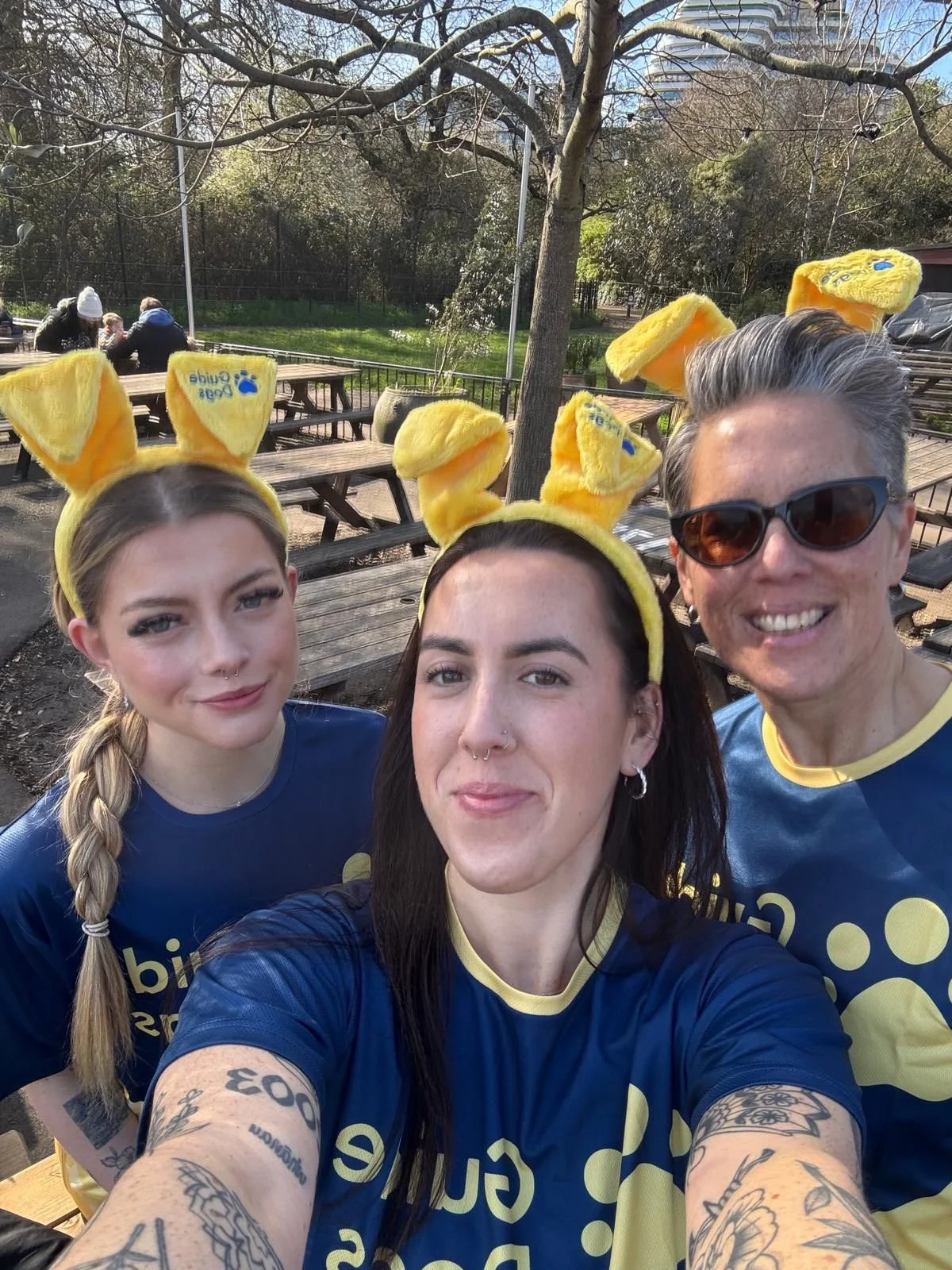
Joyce, Maysen and friend at the Guide Dogs 10k prep race
Howdie Road Runners
After the flurry of activity last week, there were fewer races this weekend though I know a lot of you were out and about enjoying the sunshine, while it lasted. It will be the spring equinox on 20 March, the first day of astronomical spring. “Equinox” comes from Latin, with equi meaning equal and nox meaning night. So, after the equinox on Thursday, the days will be longer than the nights. At last!
Before you get carried away in the sunshine, don’t forget to renew your Club membership before the end of the month. At the moment, annual membership is just £15 (plus £23 if you want to join England Athletics too). If you wait until April the cost will be £17; save yourself two quid and pay now! Just ask for our bank details, or cash will be fine.
A heads up that there may be a slightly pared back blog next week, as some of us are off racing in Cyprus and the website app doesn’t quite give full phone access.
Greg’s Race Report
Quiet weekend for Barking Road Runners members. On Saturday Joyce Golder and daughter Maysen took part in a 10k race in Battersea Park in preparation for the London Landmarks Half later in the year. On Sunday Barry Rowell ran in the Essex 20 mile race finishing in a time of 3:34:31. He said it was tough going in the wind but managed a full 12 minutes quicker than his 20 mile race last week, all part of his training for this year’s London Marathon.
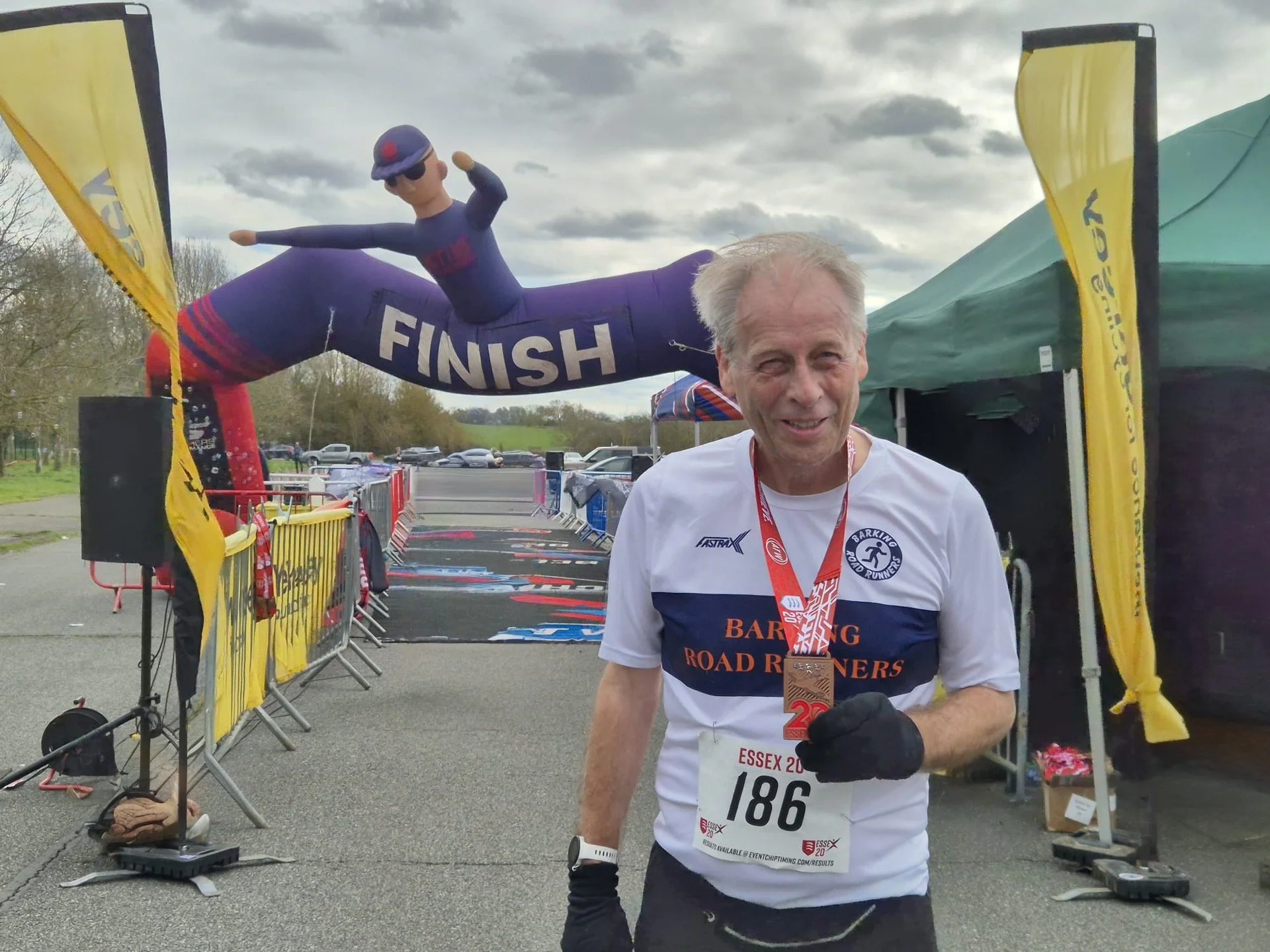
Barry at the Essex 20 mile race
Barking parkrunners
Barking - Daniel Plawiak 22:20, Rory Burr 22:27, Joshua Ezissi 23:18, Ron Vialls 23:49, Chris Muthaka 27:22, Stuart Burr 28:03, Nikki Cranmer 29:40, John Whan 29:49, Jason Li 31:08, Rob Courtier 33:23, John Lang 34:07, Martin Mason 35:07, Dawn Curtis 39:52, Sian Mansley 43:57, James Sheridan 45:54, Les Jay 53:27 and Alan Murphy 54:22.
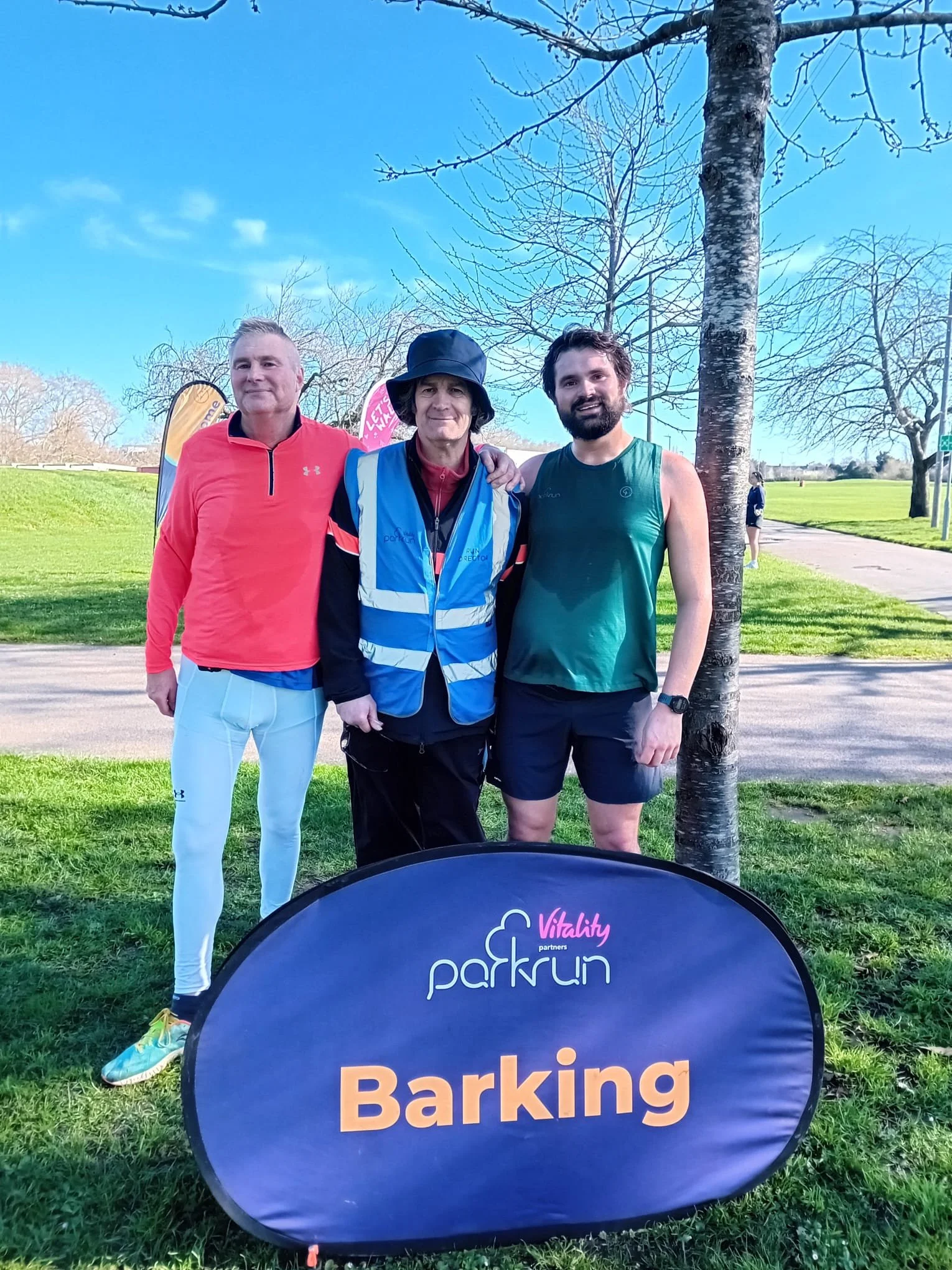
Stuart, Steve C and Rory at Barking parkrun
Bournemouth - Mark New 24:25.
Chalkwell Beach - Louise Chappell 31:41.
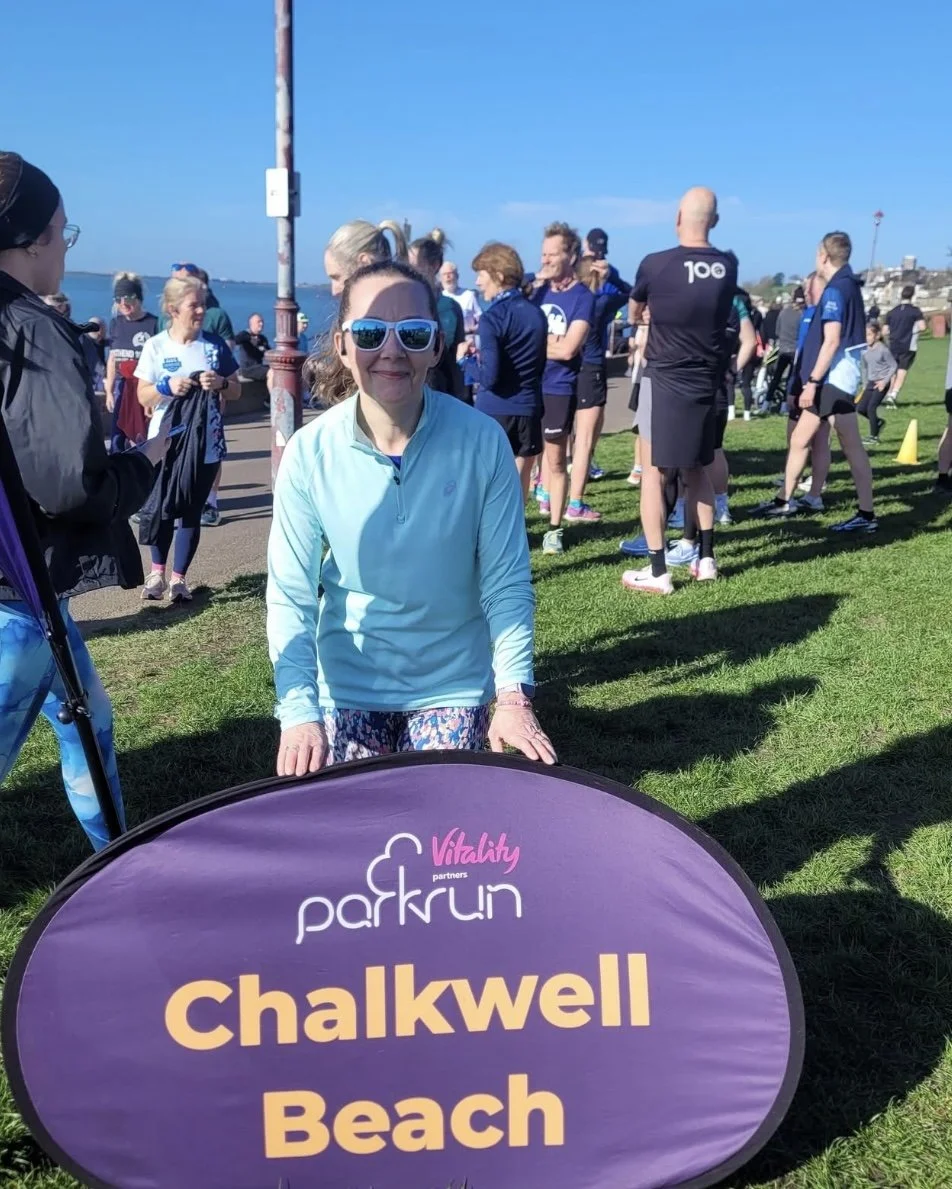
Louise at Chalkwell Beach parkrun
Endcliffe - Rosie Fforde 26:44.
Gunpowder - Paul Ward 27:41.
Princes - John Mitchell 35:45.
Raphaels - Dennis Spencer-Perkins 35:04.
Roding Valley - Paul Withyman 22:06.
Rushmoor - Owen Wainhouse 21:26.
Valentines - Richard Dudman 25:51, Kevin Wotton 32:21 and Andrew Gwilliam 51:55.
Wimpole Estate - Martin Brooks 29:23.
Highest BRR age gradings this week were Nikki Cranmer 61.01% for the ladies and Ron Vialls 77.05% for the men.
BRR Diary - March/April
The highlights of the coming weeks are listed below but you can see the full diary of BRR events on the TeamUp app. Simply download the TeamUp app to your phone, then enter the calendar key: ks67p21gt8p5gzdo66 when prompted. If you don’t want another app on your phone, you can also find it under the ‘events’ tab on the Barking Road Runners website: https://www.barkingroadrunners.org.uk/calendar.
7.00pm, Tuesday 17 March - speed session. Jim Peters Stadium, Mayesbrook Park. This week Greg is taking the session:
10 x 3 minutes with 2.45 very easy and 15 seconds all in and 4 minutes cool down.
7.00pm, Thursday 19 March - Road Run. Castle Green Centre, Gale Street, Dagenham. A social run around the roads of Barking and Dagenham. This week, we have the The ‘dark side’ (of the A13) run:
Right from Castle Green Centre, left A13, cross over the footbridge, left Scrattons Terrace/Morrison Road, right Choats Manor Way, right Choats Road, left Northgate Road, right Fielders Crescent, right Project Road, right Renwick Road, cross A13 at underpass and back to Castle Green Centre.
Saturday 21 March - Friday 27 March - Virtual Winter Handicap 05
11.00am, Wednesday 25 March - Ron’s 5k run. Barking Park, parkrun course. If you’d like to record your virtual handicap time under proper handicap conditions.
Saturday 5 April - Friday 10 April - Virtual Winter Handicap 06.
11.00am, Wednesday 8 April - Ron’s 5k run. Barking Park, parkrun course.
10.30am, Sunday 12 April - St. Clare Hospice 10k (GP02). St Clare Hospice, Hastingwood, Essex, CM17 9JX. Second race in this year’s grand prix competition, a 10k through nice countryside that raises money for a worthy cause at the same time. There is usually an ice cream van and refreshments available afterwards. Enter at St Clare 10k 2026 - St Clare Hospice.
We are the Champions!
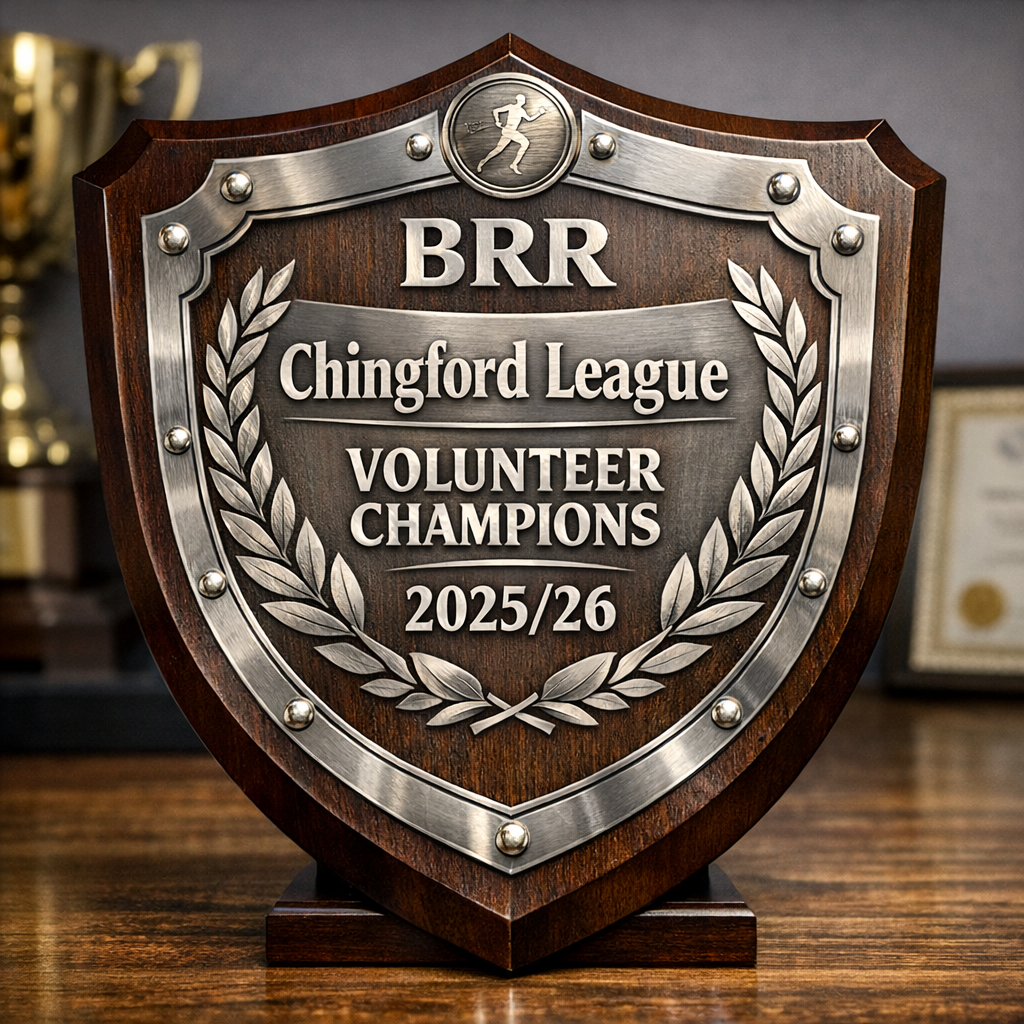
It was nice to be awarded the volunteer champions award at this year’s Chingford League (especially as we didn’t win anything else…). This means we had the highest proportion of volunteers compared to runners across the series. There was no actual trophy, but I thought this mock-up looked good!
Core Blimey!
Running is all about your legs, right? Wrong. New research suggests the opposite. A recent Australian study published by the Royal Society indicates that a weak core, not tired legs, may be the primary cause of declining running economy—the energy cost of running at a given pace. And running economy is a major predictor of marathon success.
In the study, experienced runners completed a demanding fatigue protocol including time trials and running‑economy tests. As expected, they slowed down when tired. What surprised researchers was where their form broke down. Lower‑leg mechanics—feet, ankles, knees—barely changed. Instead, fatigue showed up above the hips.
As runners tired, their torsos began to “wobble” e.g. excessive forward lean, increased rotation, hip drop, and extra vertical bounce. These upper‑body changes were strongly linked to poorer running economy. In short, when the core fatigues, energy leaks.
This matters because running itself builds leg strength, especially with hills and speedwork—but it does very little for the torso. The trunk muscles are active, oxygen‑hungry, and essential for transferring force efficiently from upper body to legs. If they tire, coordination suffers and every stride costs more energy.
The takeaway is simple: core training isn’t optional—it’s vital for runners.
Core exercises runners can use include bird‑dogs, dead bugs, side plans, planks with shoulder taps. Focus on anti‑rotation and hip stability, not just holding still. Having your feet further apart during a plank helps with stability.
Zahra’s Uni Unload
Why do we cool down after a run? It might seem useless but it's actually more important than you might think. When we finish a track session it always ends with a recovery even after the last rep and that helps with regulating your heart rate to stop you feeling dizzy and it also helps blood to circulate around the body properly avoiding blood pooling in the legs.
When we run our muscles shorten so stretching after track and running helps our muscles return to their normal state and having supple muscles helps with injury prevention by relieving pressure from your joints and tendons. Having a good range of flexibility can also aid in having a more efficient and powerful stride when running. Some areas you should focus on stretching after a run are the quads, calves, hamstrings and hip flexors.
I am Titanium

Not so cheap in the UK: titanium plasters
When Japan’s Mebuki Suzuki lined up for the men’s 10,000 metres at last year’s World Championships in Tokyo, many eyes were on his neck: stuck to his skin were small, beige circular patches.
They weren’t round sticking plasters. They were titanium patches, a type of wearable recovery product that has been popular in Japan for years. They are marketed as a way to improve circulation, reduce muscle stiffness, and help athletes stay relaxed under pressure. In Japan, they’re so common you can buy them in convenience stores and ¥100 shops (the equivalent of our pound shops).
Suzuki, who finished 20th on his world championship debut, says he started using the patches at university after his team picked up a sponsorship. “I mostly use them on my neck and back,” he explained. “They help me loosen tension in my upper body so I can run more smoothly.” Several Japanese distance runners wore the patches too.
So… do they work? Scientifically, the answer is: maybe, a little — and partly in your head. Titanium patches are legal, safe, and not banned by anti‑doping authorities. Some small studies suggest potential benefits for muscle recovery and relaxation, but much of the research has been manufacturer‑funded and independent evidence remains limited. Many experts believe any benefit likely comes from a mix of mild mechanical effects (similar to KT tape) and the placebo effect.
For runners, that doesn’t necessarily make them pointless. Belief can all influence how well we train and race. At worst, they’re harmless. At best, they might help you feel a bit looser on tired legs.
If you are curious to try them, titanium patches are readily available online, including from Amazon UK and eBay, at relatively low cost - but not for a pound, I’m afraid.
Cracker Corner
I was having trouble working out how to fasten my seatbelt, but then it clicked.
To help me sleep, I’ve started reciting the names of everyone sitting at King Arthur’s round table. Knight after knight after knight…
I went into a shop and asked, “Why is your exit sign flickering on and off?” The assistant replied “It’s on the way out.”
Quote of the Week
“Every run is a new adventure. And every mile is a gift.”
Amby Burfoot
And Finally…
Just when you thought you’d seen it all in the world of running, along comes the Padang Besar Municipality Stadium in Songkhla, Thailand with… wait for it…a square running track.
Yes, instead of the familiar curves of a standard athletics track, runners at the stadium are faced with four sharp 90-degree corners.
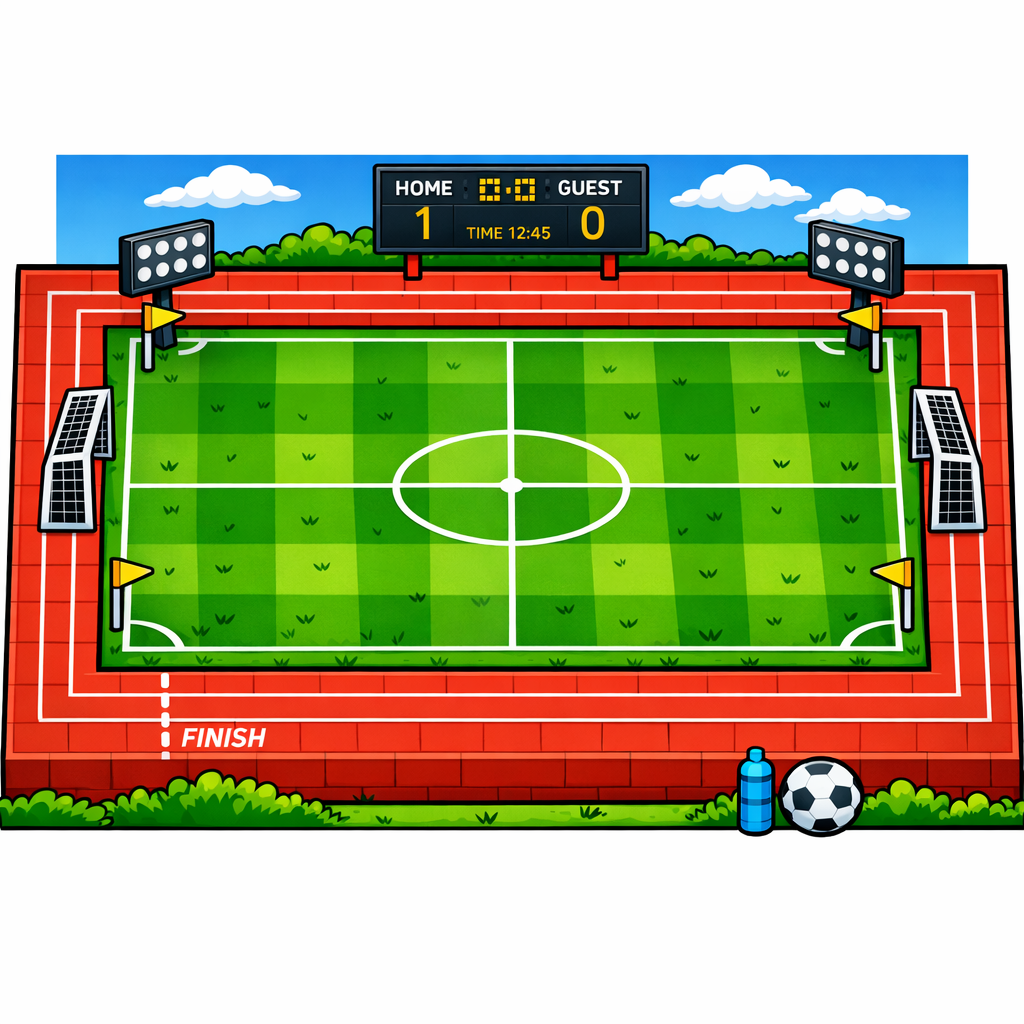
The track was installed as part of a £880,000 sports complex funded by public money. A football pitch was built first. Once it was done, officials discovered there wasn’t enough space left on the site for a standard oval track. Rather than acknowledge the problem and stop, some bright spark decided to build a track anyway — one that simply follows the rectangular edges of the pitch.
Thailand’s National Anti-Corruption Commission has now launched an inquiry, questioning not just the corners, but the value for money. For now, Thai athletes using the track must be ready for abrupt directional changes that could test the knees of even the fittest runner…
Happy Running
Alison
Chair, Barking Road Runners