BRR Blog - 23 March 2026

Kalimera, Road Runners
Plenty of racing action over the weekend, both near and far. I am finishing this week’s blog from - sometimes - sunny Cyprus. The website isn’t very mobile phone friendly, so please excuse me if some of the fonts and formats aren’t quite right. Plus, I may have had one or two celebratory glasses of Prosecco and Mastiha (an aromatic digestif, purely consumed for health reasons, of course). Yamas!
Greg’s Race Report
Barking Road Runners members travelled to Cyprus for the Limassol Half Marathon and 10k races.
First BRR finisher in the Half Marathon was Belinda Riches 1:54:23 followed by Joyce Golder 2:12:53, Alison Fryatt 2:31:02 and Dennis Spencer Perkins 2:42:23.
In the 10k Martin Page finished in 45:49 and Rob Courtier in 1:09:33. Tom Brennan pulled out due to injury.
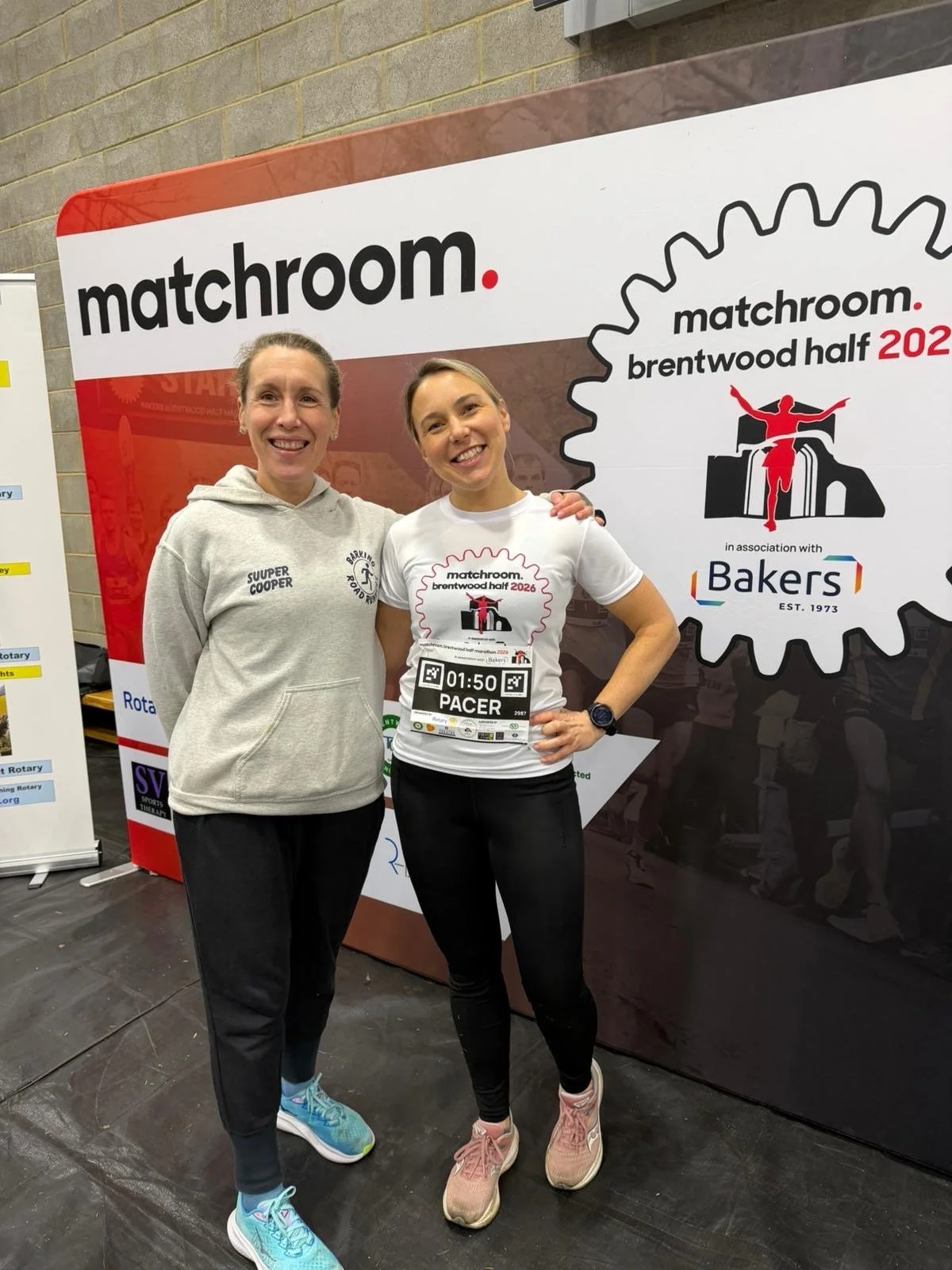
Although not a BRR GP race this year several BRR members ran the Brentwood Half Marathon first finisher for BRR was Cristina Cooper 1:43:16 followed by Jack Stanford 1:43:39, Peter Jackson 1:54:11 and Louise Chappell 2:28:48
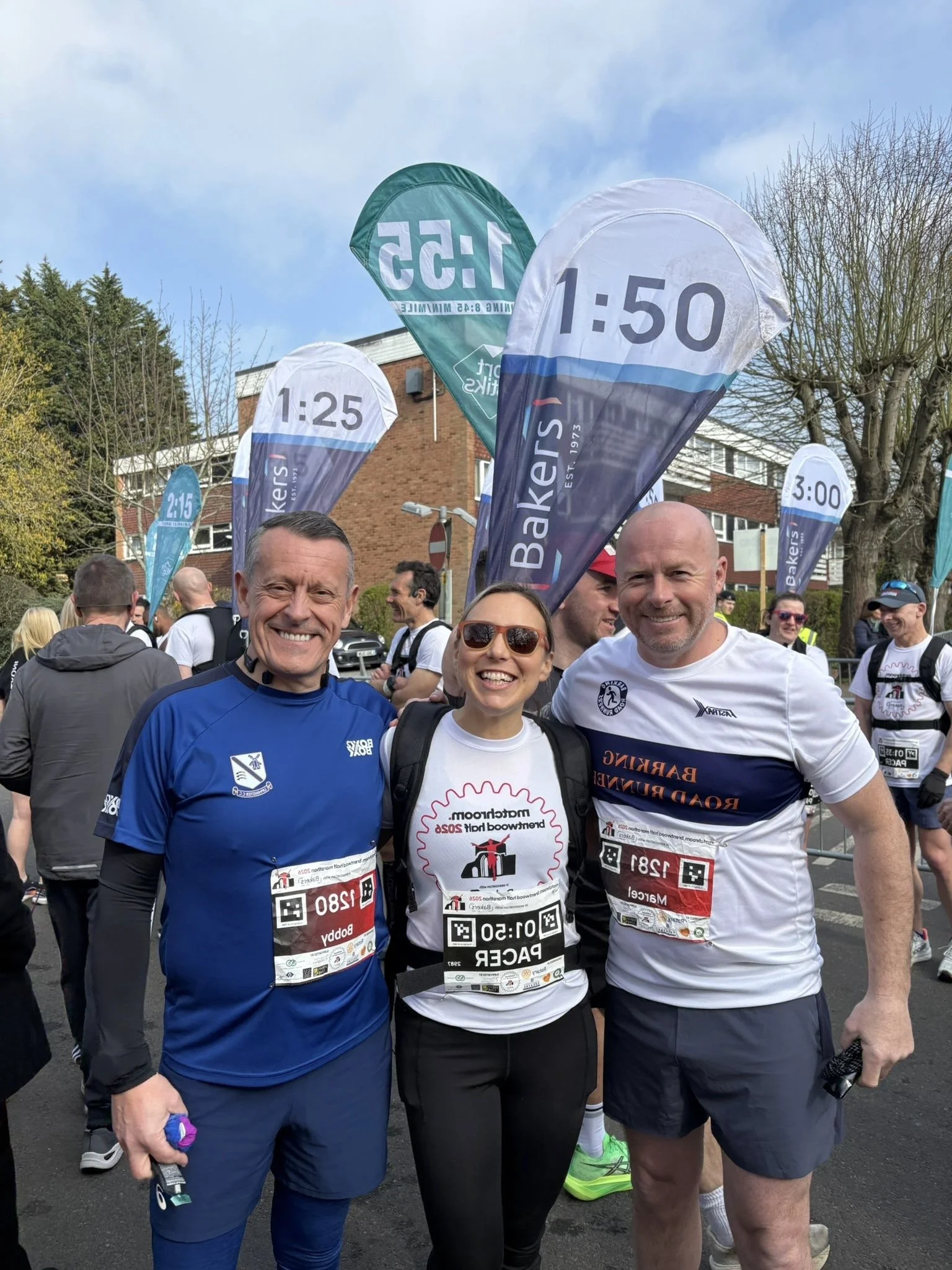
Jess Collett was once again the 1:50 pacer, finishing in 1:49:35.
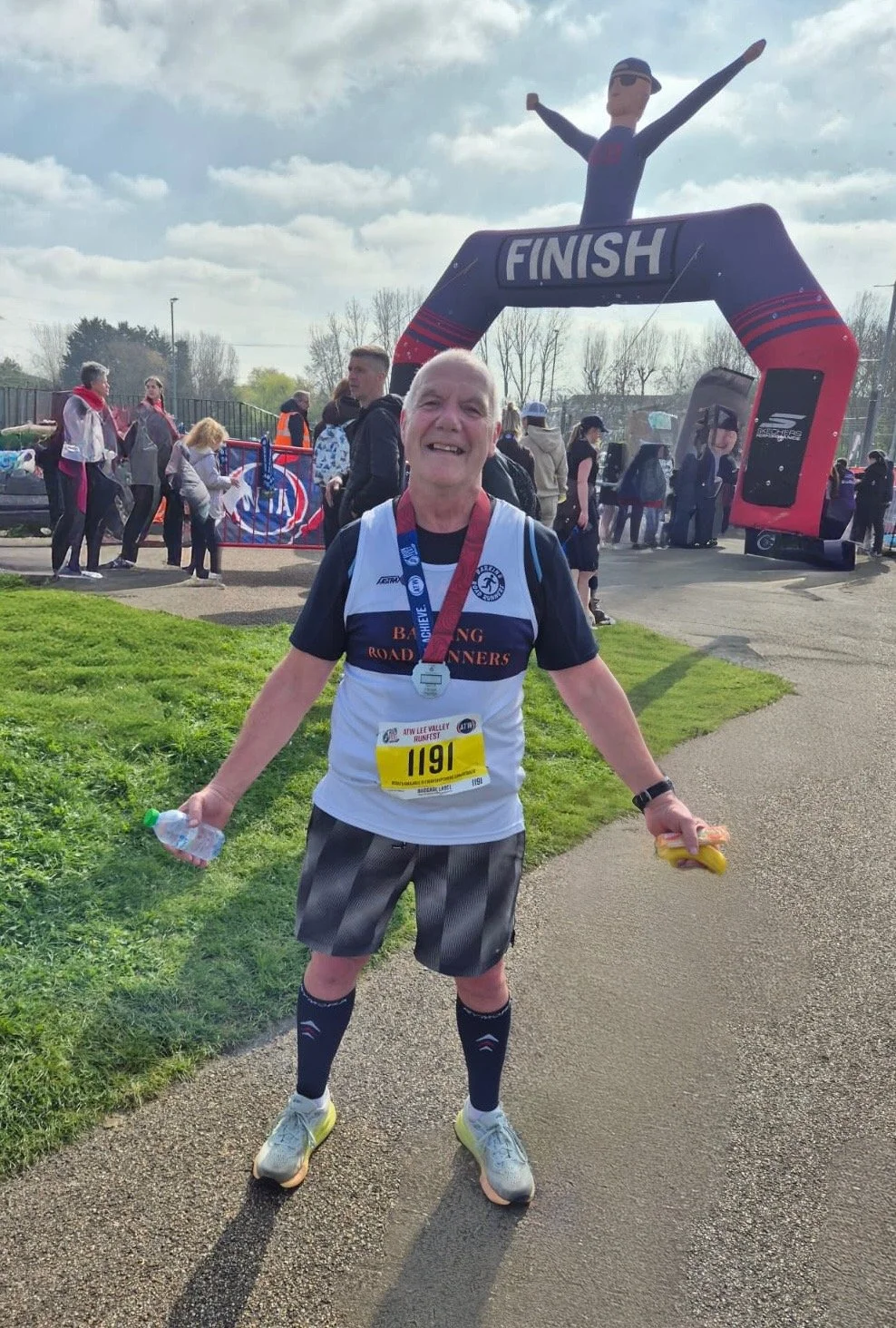
In the Lea Valley Run Fest 10k Gary Harford finished in a time of 1:01:38
BRR parkrunners
Barking - Joshua Ezissi 23:13, Shantelle Keech 23:13, Tom Shorey 27:44, Jason Li 27:59, Emma Paisley 28:11, Clodagh Shorey 31:48, Martin Mason 36:21, Nikki Cranmer 37:26, Sian Mansley 40:30, James Sheridan 42:15, Darren Graham 42: , Alan Murphy 53:50 and Denise Graham 54:54.
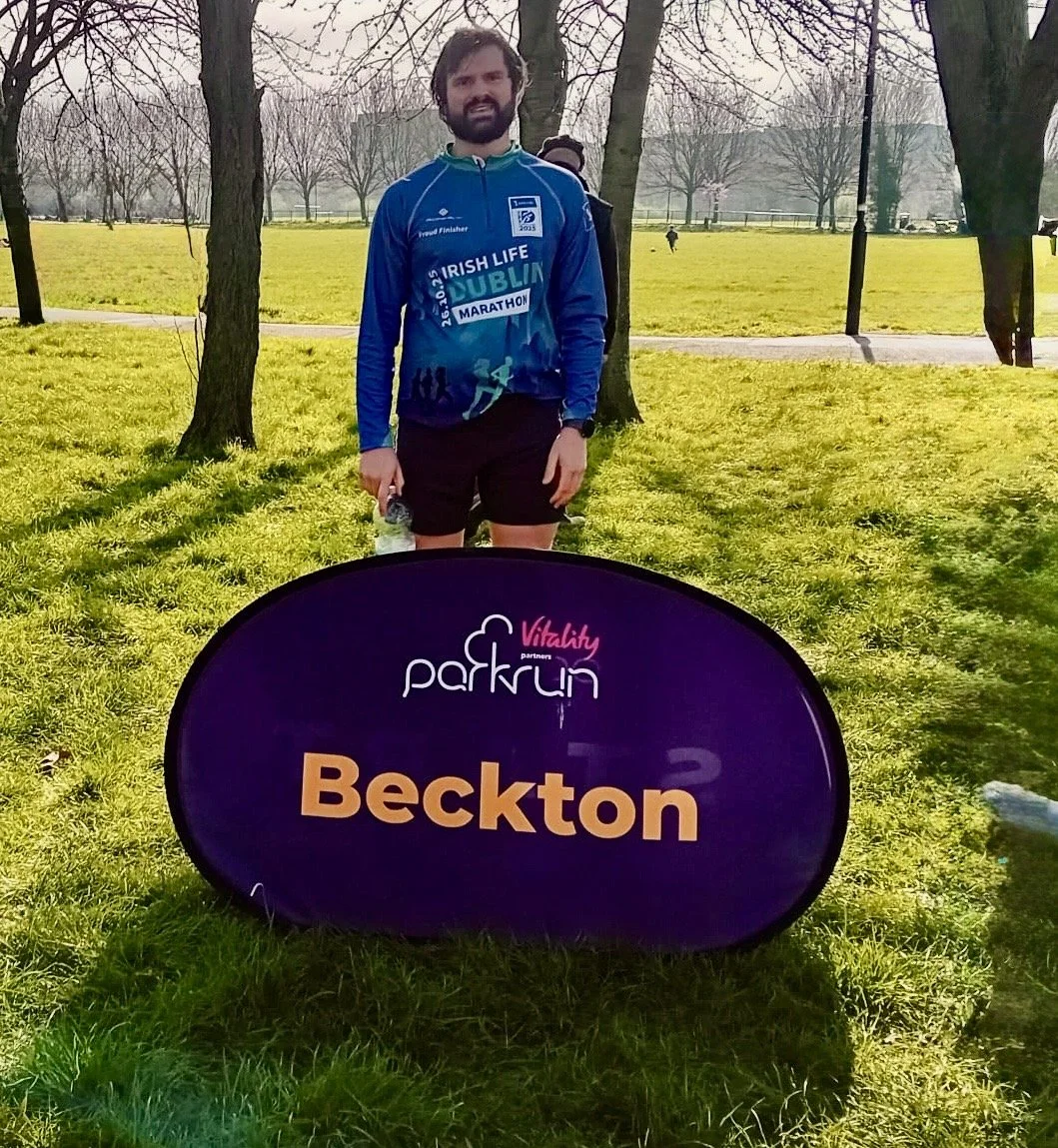
Beckton - Rory Burr 22:42.
Finsbury Park - John Mitchell 33;47.
Highcliffe Beach - Mark New 24:57.
Huntingdon - Sunny Bulchandani 27:58.
Sheringham - Paul Ward 28:39.
Valentines - Richard Dudman 25:29, Kevin Wotton 26:37 and Andrew Gwilliam 49:07.
Wanstead Flats - Stuart Mackay 20:51.
Wimpole Estate - Martin Brooks 28:05.
Highest BRR age gradings this week were Shantelle Keech 63.75% for the women and Stuart Mackay 70.74% for the men.
BRR Diary - March/April
The highlights of the coming weeks are listed below but you can see the full diary of BRR events on the TeamUp app. Simply download the TeamUp app to your phone, then enter the calendar key: ks67p21gt8p5gzdo66 when prompted. If you don’t want another app on your phone, you can also find it under the ‘events’ tab on the Barking Road Runners website: https://www.barkingroadrunners.org.uk/calendar.
Saturday 21 March - Friday 27 March - Virtual Winter Handicap 05. The competition is hotting up - don’t forget to let Dennis know your time by Friday. Proof, as always, is required!
7.00pm, Tuesday 24 March - speed session. Jim Peters Stadium, Mayesbrook Park. This week Jess is taking the session:
*Paarlauf Relay*:
- Everyone pairs up, ideally with someone of similar speed/ability.
- Person one runs around the track, RPE 7-8, whilst person two takes their recovery run across the track to meet them & "pass the baton".
- Then person two runs around the track, whilst person recovers jogging across it.
- There will be 12min of 200m run, with recoveries once across the track to the other side.
- Then 12min of 400m run, with recoveries there and back, to "pass the baton" in the same place.
- Then 12min of 200m run, with recoveries once across the track to the other side, to mix it up!
Try to get as many laps as possible!
11.00am, Wednesday 25 March - Ron’s 5k run. Barking Park, parkrun course. A great way to record your virtual handicap time under proper handicap conditions.
7.00pm, Thursday 26 March - Road Run. Castle Green Centre, Gale Street, Dagenham. A social run around the roads of Barking and Dagenham.
11.00am, Friday 3 April - Crown to Crown 5k. Westley Heights Country Park, (rear the back of Miller and Carter pub). Partly trail, with a section on tarmac. A cheap and cheerful, low-key, race, only £2.50. Enter on the day or at https://www.entrycentral.com/Crown-to-Crown
Saturday 4 April - Friday 10 April - Virtual Winter Handicap 06.
11.00am, Wednesday 8 April - Ron’s 5k run. Barking Park, parkrun course.
10.30am, Sunday 12 April - St. Clare Hospice 10k (GP02). St Clare Hospice, Hastingwood, Essex, CM17 9JX. Second race in this year’s grand prix competition, a 10k through nice countryside that raises money for a worthy cause at the same time. There is usually an ice cream van and refreshments available afterwards. Enter at St Clare 10k 2026 - St Clare Hospice.
March Committee Minutes
The eagle-eyed amongst you will have noticed that there were no Committee minutes in February as there wasn’t a meeting. Instead, the Commitee met early in March. The minutes can be found here on my wonderfully redesigned Committee minutes webpage. Over two years of minutes for your entertainment!
Gold!
There were some great results for Team GB & NI at the World Indoor Athletics Championships in Poland over the weekend.
It was gold for Keely Hodgkinson in the 800m (1:55:30), for Josh Kerr in the 3000m (7:35:56), for Georgia Hunter-Bell in the 1500m (3:58:53), and for Molly Caudery in the pole vault (4.85 metres).
Overtraining or Undereating?

How this is the kind of running-related advice that I like: one that encourages me to eat more!
The idea of ‘overtraining’ conjures images of endless, day-after-day, runs. But the reality is much more complex.Overtraining is a physiological state caused by an excess accumulation of physiological, psychological, emotional, environmental and chemical stress.
Recent research has revealed that what we often blame on training too hard may actually stem from not eating enough to support our activity levels. In fact, the symptoms of overtraining and undereating overlap by as much as 90%, making it difficult to tell them apart.
When we train, our bodies are exposed to various stresses – physical, psychological, even environmental. To adapt and grow stronger, we need adequate fuel. If you’re not eating enough, especially after intense sessions, you risk a state called Low Energy Availability (LEA). This means your body lacks the energy it needs for basic functions, let alone optimal performance. Over time, this can lead to Relative Energy Deficiency in Sport (RED-S), causing fatigue, injuries, hormonal imbalances, and a decline in performance.
Athletes are particularly vulnerable to underfuelling, whether due to pressure to maintain a certain body weight, lack of nutritional knowledge, or simply busy schedules that make regular meals a challenge. Sometimes, training hard even suppresses appetite, making it harder to recognise when you’re not eating enough.
So, how can you spot and prevent the dangerous cycle of overtraining and undereating? The key lies in listening to your body and prioritising recovery as much as training itself. Here are five essential tips to help you stay healthy and maintain peak performance:
Treat yourself to substantial, filling meals in recovery windows between sessions. You should have a nice balance of protein and healthy carbs.
Listen to your body when it feels strained. ‘Kill or cure’ is not a good approach.
Do not push yourself too hard – this can cause injury, fatigue, and long-term performance decreases.
Take rest days, and try to give yourself 48 hours between particularly intense sessions.
Drink plenty of water and electrolytes to replenish.
Ultimately, fuelling your training properly and allowing for rest isn’t just about performance – it’s about safeguarding your long-term health and well-being. So, eat well, hydrate, and take a break when your body asks for it.
The Final Countdown

There are three big GB marathons coming up: Brighton; Manchester; and London. Let alone the Boston Marathon, which Belinda and Cristina are running. My stomach churns just thinking about it, and I’m not even running. If you are, I’m sure you are 100% on top of your training plan (unless sadly injured, like Jason S), but here is a little summary of where you should be at this stage, based on normal best practice:
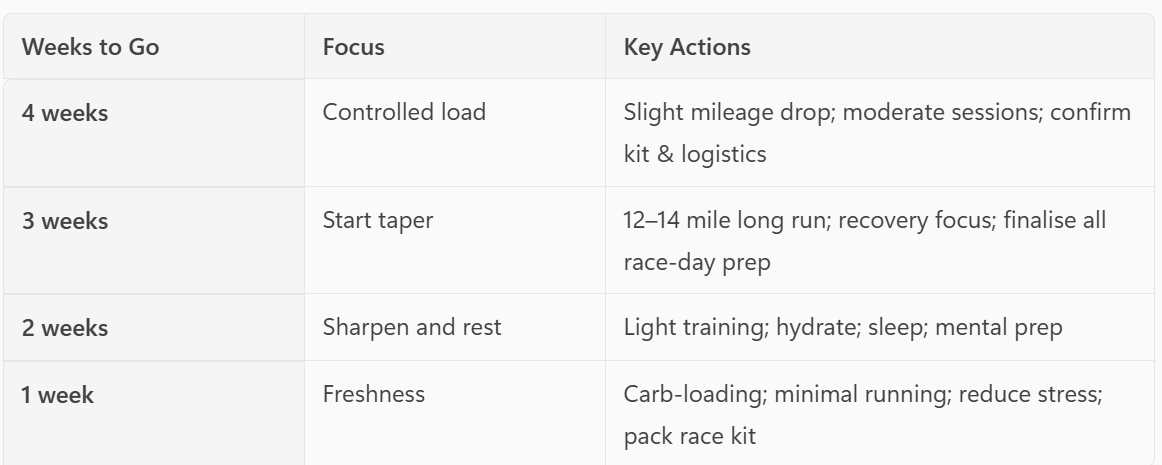
Where you should be in your marathon training journey, over the last month before race date
Zahra’s Uni Unload
If you've signed up for a race internationally you have to prepare and train in a different way to if you were racing locally
Most Europe races tend to be pretty flat [not if you are doing a trail race - Alson] so you need to prepare yourself by training on flat terrain as you will be using the same muscles so you want them to be strong to help avoid early fatiguing on the day.
If you’re going somewhere with lots of inclines hill training is good but also train on long steep hills and practice downhill repeats too, to help with eccentric quad strengthening. If you're racing in a warm climate then try to wear extra layers on your run to increase the temperature and use saunas to help your body adapt before you leave. When racing at high altitude you should aim to arrive ten days before your race to allow your body to properly acclimatise and it helps your blood plasma volume stabilise and your breathing rate to normalise.
Make sure you pack your own fuel and rely on what you've used in training, not what random people are giving out, and pack extra fuel as you don't know if you will be able to find your specific fuel in that place. Try to train on similar surfaces to the race so if your know your going to run on sand or cobblestones, practice that beforehand.
Cracker Corner
Chris bought me a space rocket for my birthday. I was over the moon.
Birthdays are good for your health. The more you have, the longer you live.
I don't count my age in years anymore. Archaeologists prefer carbon dating.
Quote of the Week
“We don’t stop exercising because we grow old. We grow old because we stop exercising.”
Dr. Ken Cooper
the father of aerobics
And finally,
Last Thursday night’s run along Choats Manor Way and Choats Road made me curious about who Choat was. So I typed the query ‘who was Choat* in Dagenham?’ into Google. Google changed it to ‘who was shot in Dagenham?’ and gave me a long list of incidents. I’m not sure what that says about where we live…
Happy Running
Alison
Chair, Barking Road Runners
*According to AI, “Choat” is an surname derived from the old English word sceot / scytta / shut, meaning:
a “dweller at a shoot/shut” – a narrow lane or passage, or
an archer, or
someone “quick” or “ready.”
So, perhaps there was a Mr Choat in Dagenham once, who was a fast archer who lived in a narrow lane. If so, he has sadly been lost to history. Unless you know better!